Home Smith Machines: What We’d Actually Put in a Garage Gym
For most garage setups, the smith machine worth buying is a combo unit that doubles as a power cage. That way you get guided-bar safety without giving up free-weight training as your goals change. A dedicated smith machine makes more sense if you train alone often and want built-in bailout points every few inches of bar travel. A standalone rack, on the other hand, fits lifters who already have a spotter or partner. By 2026, smith machines built for home use come as standalone units or bolt-on attachments for a power rack, and several fit comfortably in a one-car garage. This guide compares footprint, bar-path design, and price so you can match the right pick to how you actually train, rather than defaulting to whatever’s cheapest.
The best home smith machines we recommend
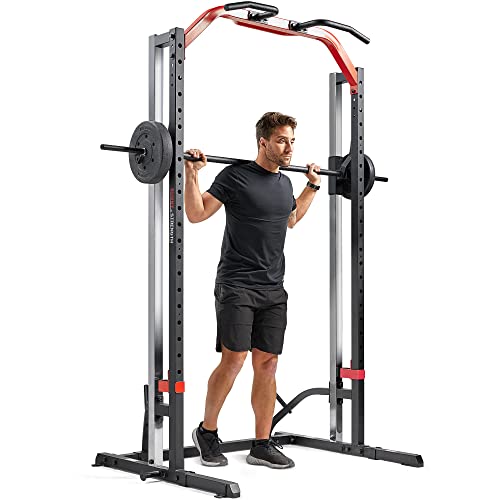
Fitness Reality X-Class Light Commercial Smith Cage
This is the one we point most garage-gym shoppers toward because it doubles as a power cage with pull-up station and still has the smith bar's linear rails for guided squats and bench presses. The counterbalanced bar takes the guesswork out of unracking heavy weight solo.
- Functions as both a free rack and a guided-bar smith machine
- Counterweight system makes the bar feel lighter to lift off hooks
- Pull-up bar and multiple j-hook positions included
- Footprint is bigger than a standalone smith machine
- Assembly takes a couple hours with two people

CAP Barbell Smith Machine
CAP's smith machine keeps things simple: a sliding bar on fixed rails with a bench included in some bundles. It won't replace a full rack, but for someone just starting strength training at home, the safety catches every few inches make it easy to bail on a rep.
- Lower price point than cage-style combos
- Bar catches at frequent intervals for safe bailouts
- Smaller footprint than a full power rack
- No pull-up bar or attachment points
- Some buyers note the bar path feels stiff until broken in

Titan Fitness Smith Machine
Titan's version is built heavier than most home units, with thicker rails and a bar that owners describe as gliding with noticeably less friction than budget models. It's aimed at people who've outgrown a beginner setup.
- Heavier-gauge steel than most home smith machines
- Smooth linear bearing bar path
- Higher weight capacity for serious lifters
- Availability on Amazon can be inconsistent
- Needs a dedicated corner of the garage due to size

Signature Fitness Power Rack with Smith Machine Attachment
We like this option because it starts as a conventional power rack and the smith attachment bolts on, so you're not locked into guided-bar-only training. It's a smart pick for someone still deciding how they want to train.
- Rack works as free-weight cage or smith machine
- Attachment points for pulley and dip options
- Good value for a combo unit
- Smith attachment adds assembly complexity
- Overall footprint is large once fully built out

Papababe Power Cage with Smith Bar Attachment
This is the most space-conscious combo unit we came across, trimming down the footprint without cutting the smith bar's safety catches. It's not going to feel like a commercial gym rig, but for a one-car garage it's a reasonable middle ground.
- Smaller footprint than most cage-and-smith combos
- Reasonably priced for the added smith functionality
- Includes basic pull-up bar
- Bar path has a bit more play than pricier options
- Weight capacity is lower than heavier-duty picks

Fitness Reality Multi-Function Power Cage with Smith Bar
We suggest this to people who've never lifted at home before because the safety catches are forgiving, and owners consistently note the instructions are clearer than most in this price range. It won't win on aesthetics, but it gets someone training safely fast.
- Beginner-friendly safety catch spacing
- Clear assembly instructions
- Doubles as a basic power cage
- Feels less premium than higher-priced combos
- Limited attachment ecosystem
How we chose
We looked at units that are actually purchasable on US Amazon right now, not discontinued listings or gray-market imports. For each one, we checked the bar path design: linear bearings versus simple sliding hooks that owners report can bind after a few months of use. We also weighed the footprint relative to a standard 2-car garage bay, whether the unit doubles as a functional power cage, and how forgiving the safety catch spacing is for someone lifting alone. On top of that, we read through verified buyer photos and assembly complaints, since smith machine hardware tends to reveal quality issues in the first few weeks, not the first few reps.
Smith machine vs. Power rack: which one actually fits your training?
This is the question we get most from people shopping this category, and it’s worth answering honestly before you buy either.
Choose a smith machine if…
- You’re lifting alone most of the time and want built-in bailout points every few inches of travel
- You’re newer to strength training and want the stabilization the guided bar provides while you build confidence with squats and bench
- You’re working with a smaller space and don’t need the loading versatility of a full free-weight cage
Choose a standalone power rack if…
- You want to train free-weight squats, bench, and pulls the way a barbell actually moves in a straight line, not a fixed vertical or angled track
- You plan to add pull-up work, band attachments, or a lat pulldown down the road
- You have a training partner or spotter most sessions and don’t need the guided safety as much
When you can't decide, the combo units on our list, which work as a cage and a smith machine in one, tend to be the safer purchase because you can train either way as your goals shift.
What to check before buying a home smith machine
Footprint and ceiling height
Most home smith machines need at least 4 feet of depth and 6-7 feet of vertical clearance once you factor in the bar at full extension. Measure your space before ordering, returns on units this heavy are a genuine hassle.
Bar path smoothness
Budget models rely on basic hooks that slide along rails, while higher-end versions use linear bearings instead. Although the bearing-equipped units carry a higher price, owners who've used them for months note that they remain noticeably smoother even as chalk and sweat accumulate.
Safety catch spacing
Look for catches every 2-3 inches rather than every 6+. Tighter spacing means you can bail on a failed rep closer to where you actually failed, which matters more than people expect until they need it.
Weight capacity vs. Your actual loads
Most home setups top out somewhere between 300-500 lbs, bar included. If your squat exceeds that range, you'll want to consider sturdier options like Titan's version instead of a budget combo.
Comparison at a glance
| Model | Best for | Doubles as power rack? | Price |
|---|---|---|---|
| Fitness Reality X-Class Smith Cage | Overall home gym use | Yes | $$$ |
| CAP Barbell Smith Machine | Budget-conscious beginners | No | $$ |
| Titan Fitness Smith Machine | Serious/heavier lifters | No | $$$ |
| Signature Fitness Rack + Smith Attachment | Flexible free-weight/guided training | Yes | $$$ |
| Papababe Power Cage + Smith Bar | Smaller garages | Yes | $$ |
| Fitness Reality Multi-Function Cage | First-time buyers | Yes | $$ |
Whichever direction you go, pairing your smith machine with a solid adjustable bench and a couple of bumper plates rounds out a genuinely capable home gym equipment setup without needing a second piece of guided machinery.
Related guides
- Best home gym setups
- Power racks and cages compared
- Barbells and plates buying guide
- Best adjustable weight benches
- Resistance training equipment guide
- All buying guides
- How we rank equipment
- About TalkGyms
Ready to compare home smith machines?
See current pricing and availability for our top pick.
Frequently asked questions
Is a smith machine worth it for a home gym?
It’s worth it if you train alone often or want guided-bar safety while building confidence, but it shouldn’t fully replace free-weight training for most lifters.
Can a smith machine replace a power rack?
Combo units that include a cage function can, but a standalone smith machine lacks the free-weight versatility and attachment options of a true rack.
How much space does a home smith machine need?
Plan for roughly 4 feet of depth and 6-7 feet of ceiling clearance at minimum, more if it includes a cage or pull-up bar.
Are budget smith machines safe to use?
Yes, as long as the safety catch spacing is tight and the unit is bolted down or weighted per the manufacturer’s instructions.
Do I need a spotter with a smith machine?
No, that’s the main appeal. The fixed bar path and catch points let you train squats and bench safely without a spotter.
What’s the weight capacity of most home smith machines?
Most fall between 300-500 lbs including the bar; heavier-duty models like Titan’s push higher for serious lifters.
Is it hard to assemble a home smith machine?
Combo cage-and-smith units typically take a couple hours with two people; standalone smith machines are usually simpler and faster to build.
More Home Gyms
 Home Gym Signs Worth Hanging: Our Picks for 2026
 Home Gym Tax Break: What Actually Qualifies (and What Gear Makes Sense to Buy)
 Mikolo HR05 All-in-One Home Gym Review: Is This Budget Power Tower Worth It?
 The Best All-in-One Home Gyms for Small Spaces in 2026
 Building a Minimalist Home Gym: The Gear That Actually Earns Its Space
 Smith Machine Chest Press: What It Trains and Which Home Machines Do It Best