Thoracic Extension Foam Roller Exercise: How to Do It Right (2026 Guide)
The thoracic extension foam roller exercise works by placing a roller horizontally under your shoulder blades, then letting your head and arms drop back so gravity pulls your mid-back into extension it can’t easily reach on a flat surface. Done correctly, it undoes the rounded-shoulder, hunched-desk posture that piles up from sitting, driving, and scrolling in 2026. This guide breaks down the exact setup, how it differs from a general thoracic extension foam roller upper back stretch, and how to progress from static holds to controlled reps. It also covers which foam rollers hold their shape and support under repeated use, since the wrong density turns the movement into a shallow bounce instead of a real stretch.
The best foam rollers for thoracic extension and upper back work

ProsourceFit High Density Foam Roller
Owners consistently point to this roller for daily use next to a desk since it's firm enough to load the mid-back without collapsing over time, and the 36-inch length lets you support your head and hips at the same time.
- Firm, consistent density that holds up over months
- Long enough for full-spine support
- Textured surface grips workout mats
- Too firm for anyone brand-new to rolling
- No storage bag included
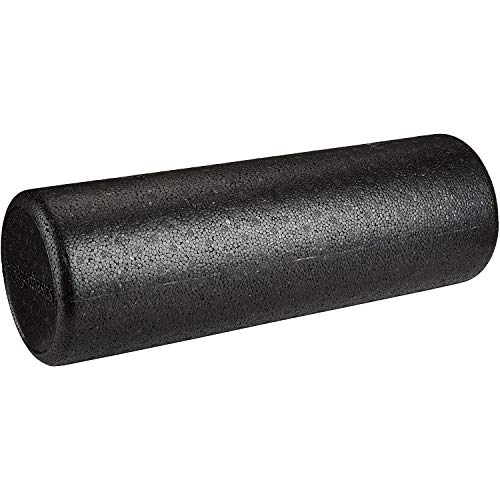
Amazon Basics High-Density Round Foam Roller
If you just want to confirm whether thoracic extension work helps your upper back before spending more, this roller delivers at a low price point without feeling flimsy, based on owner feedback.
- Very affordable
- Smooth surface is comfortable on bare skin
- Compact enough to store under a bed
- Density softens noticeably after heavy use
- Shorter length limits some positions

Yes4All High Density Foam Roller
The slightly softer EPP foam here is reported by owners to make the first few sessions of thoracic extension less intimidating than a rock-hard roller, making it a good bridge before moving to firmer options.
- Gentler on tender thoracic segments
- Multiple length and color options
- Holds shape well for the price
- Advanced users may outgrow the softness quickly
- Slight foam smell out of the box

CAP Barbell Foam Roller
At 12 to 18 inches depending on the version, this roller travels easily in a gym bag and still offers enough surface area to work thoracic extension segment by segment.
- Small footprint for storage
- Sturdy for its size
- Good price-to-durability ratio
- Shorter length means less full-back support
- Firmness varies slightly by batch

Bob and Brad Vibrating Foam Roller
Owners report that adding vibration to a thoracic extension hold speeds up how quickly upper-back tension releases compared to a static roller, especially after long desk days.
- Vibration helps relax tight paraspinal muscles
- Rechargeable and reasonably quiet
- Multiple intensity settings
- Pricier than standard foam rollers
- Heavier, less ideal for travel

RENPHO Vibrating Foam Roller
Reviewers who pair this after heavier upper-back training days note that the vibration modes make extended thoracic extension holds feel less like an endurance test and more like recovery.
- Long battery life for regular use
- Smooth surface texture
- App-free simple controls
- Slightly narrower diameter than some prefer
- Vibration motor adds bulk
How we chose these foam rollers
These rankings weigh firmness consistency reported by owners, length and diameter (which affect how much of the spine you can support at once), surface durability noted in reviews, and price relative to how long the foam is reported to hold its shape. We also factored in real feedback on comfort during extended holds, since thoracic extension work often means resting on the roller for 30-60 seconds at a time rather than rolling continuously.
What thoracic extension actually targets
Your thoracic spine is the mid-back section running from roughly the base of your neck to your lower ribs. It’s built for rotation and some extension, but most modern lifestyles: sitting, driving, scrolling, pull it into constant flexion. Over time that limits how far you can extend or rotate through the mid-back, which then forces your lower back and shoulders to compensate during lifting, overhead pressing, or even just standing up straight.
A foam roller acts as a pivot point, letting you extend your spine in a way your muscles typically resist when you're simply lying on a flat surface. By positioning the roller across your upper back and allowing your head and arms to fall backward, you get a passive extension that's hard to achieve without this kind of equipment.
How to do the thoracic extension foam roller exercise
- Set up: Lie on your back with the roller placed horizontally under your shoulder blades, knees bent, feet flat on the floor.
- Support your head: Interlace your fingers behind your head or cross your arms over your chest to support your neck.
- Extend slowly: Let your upper back drape backward over the roller, allowing your head to drop toward the floor. Keep your hips down and glutes lightly engaged so the movement stays isolated to the mid-back rather than the lower back.
- Hold, don’t bounce: Hold the stretch for 20-30 seconds, breathing slowly. This is the thoracic extension foam roller stretch in its purest form.
- Reposition: Shift the roller an inch or two up or down your spine and repeat, working segment by segment rather than one long hold in a single spot.
- Progress: Once comfortable, add small controlled reps: extending back and returning to neutral 5-8 times per position, instead of only static holds.
Thoracic extension vs. General upper back rolling
People often mix up a general thoracic extension foam roller upper back stretch with ordinary back rolling, yet the two are different movements. Moving the roller up and down the spine without pausing works more like a soft-tissue massage, whereas genuine thoracic extension work means you stop, set the roller at one fixed spot, and actively extend backward over it. Each has its place, but when mobility, rather than just relief from tension, is what you're after, the static extend-and-hold pattern described above is the one that actually increases range of motion over time.
Choosing the right roller for this movement
Density
Very soft rollers compress too much to create a real fulcrum, which limits how much extension you actually get. Firmer, high-density foam holds its shape under body weight and gives a more effective stretch, though beginners with acute tightness may want to start slightly softer.
Length and diameter
Choosing a roller in the 34-36 inch range means your head and pelvis can be supported at the same time, offering a level of stability that many prefer. Rollers in the 12-18 inch range, on the other hand, are more convenient for storage and travel, though they demand somewhat better balance to use.
Texture
Smooth rollers are generally more comfortable for extension holds since you’re resting on them rather than actively rolling; textured or ridged surfaces are more useful for tissue release elsewhere on the body.
Comparison table
| Roller | Density | Length | Best use |
|---|---|---|---|
| ProsourceFit High Density | Firm | 36 in | Daily thoracic extension |
| Amazon Basics High-Density | Medium-firm | 26 in | Budget starter roller |
| Yes4All High Density | Medium | 18-36 in options | Beginners easing in |
| CAP Barbell Foam Roller | Firm | 12-18 in | Travel and small spaces |
| Bob and Brad Vibrating | Firm + vibration | 13 in | Restricted mobility |
| RENPHO Vibrating | Medium-firm + vibration | 13 in | Post-workout recovery |
Common mistakes to avoid
- Letting the lower back take over: If your ribs flare and lower back arches instead of the mid-back extending, the roller is likely positioned too low.
- Rushing the movement: Bouncing or moving too fast reduces the effectiveness of the stretch and can feel uncomfortable rather than productive.
- Skipping warm-up: A minute of light cardio or arm circles beforehand makes the extension feel noticeably less stiff.
- Only doing one position: Working just one spot on the thoracic spine leaves other segments untouched; move the roller incrementally.
Related guides
- Best recovery tools and mobility gear
- Best weight benches for home gyms
- Resistance training equipment guide
- Building a complete home gym
- More fitness equipment guides
- How we rank fitness gear
- About TalkGyms
Ready to work on thoracic mobility?
See current prices on our top-rated foam rollers for thoracic extension.
Frequently asked questions
How long should I hold a thoracic extension foam roller stretch?
Hold each position for 20-30 seconds, then reposition the roller slightly and repeat rather than holding one spot for minutes at a time.
Can this exercise help with rounded shoulders?
Yes, regular thoracic extension work improves mid-back mobility, which makes it easier to hold shoulders back without straining, though it works best alongside posture-focused strength training.
What density foam roller is best for this movement?
A medium-firm to firm roller works best since it holds its shape under body weight and creates a real fulcrum for extension, unlike very soft foam.
Is a longer or shorter roller better for thoracic extension?
Longer rollers (30-36 inches) offer more stability by supporting the head and hips together, while shorter rollers are easier to store and travel with.
How often should I do the thoracic extension foam roller exercise?
Most people benefit from doing it 3-5 times per week, especially after long periods of sitting, though daily short sessions are also fine.
Does vibration add real benefit to this exercise?
Many people find vibrating rollers help relax tight paraspinal muscles faster, making the extension feel less restricted, though a standard firm roller is effective on its own.
Can beginners with a stiff upper back do this safely?
Yes, starting with a softer roller and shorter holds is a safe way to ease into the movement before progressing to firmer foam or longer holds.
Is rolling up and down the spine the same as thoracic extension?
No, continuous rolling is more of a soft-tissue massage, while thoracic extension involves holding a fixed position and actively extending backward over the roller for mobility gains.
More Buying Guides
 Jump Rope Cardio Workout: The Ropes and Routines That Actually Deliver ResultsWhat Does a Mini Barbell Do? A Real-World Breakdown for Home Gyms
 The Best Barbell Tricep Workout Setup for Home Gyms in 2026How to Use Dumbbells: A Beginner’s Guide to Form, Weight, and Progression
 Stairmaster vs. Elliptical: Which Cardio Machine Actually Fits Your Home Gym?How to Do the Ski Erg Correctly: Technique, Common Mistakes, and Setup Tips