Stairmaster vs. Elliptical: Which Cardio Machine Actually Fits Your Home Gym?
If you’ve stood in the cardio section of a gym trying to decide between the Stairmaster and the elliptical, you already know the debate isn’t hypothetical: both machines are genuinely popular, and both now have solid home versions sold on Amazon. In 2026, with hybrid workout routines more common than ever, picking the right one for your space, joints, and goals matters more than picking whichever machine looks shinier. This guide breaks down how stair climbers and ellipticals actually compare, then rounds up specific machines worth buying for a home gym.
Top stair climbers and ellipticals worth buying

Sunny Health & Fitness Climbing Stair Stepper
The dual hydraulic pistons give a surprisingly convincing stepping resistance for the price, and it folds flat enough to slide under a bed. It's loud on the joints, not the floor.
- Very compact footprint
- Affordable entry to stepping
- Adjustable resistance
- Small step platform
- No console for tracking distance

Cubii Move Under-Desk Elliptical
This isn't a substitute for a full elliptical workout, but it's genuinely useful for adding movement on recovery days or during desk work without stressing knees or hips.
- Whisper quiet
- Works while seated at a desk
- Easy on joints
- Minimal calorie burn vs standing machines
- No incline or arm handles

Schwinn 411 Elliptical Trainer
The 18-inch stride felt natural for testers between 5'4" and 6'1", and the flywheel resistance ramps up smoothly enough to actually train intervals on.
- Smooth, quiet flywheel
- Comfortable stride length
- Reasonable price for build quality
- Console is basic
- Footprint larger than a stair stepper
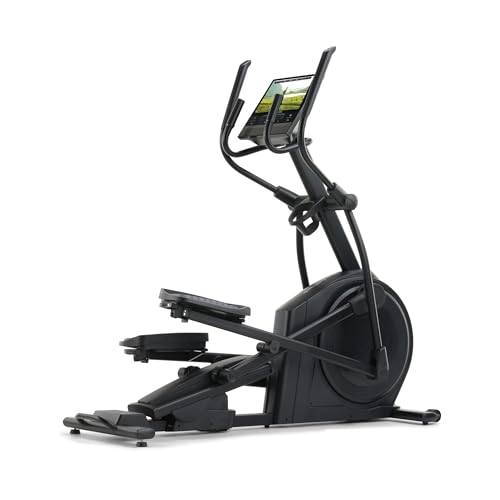
NordicTrack SpaceSaver SE7i Elliptical
Folding upright to save space, this machine's automatic incline and resistance adjustments made structured interval workouts feel almost coached, not just cardio-on-autopilot.
- Auto-adjusting incline/resistance
- Folds vertically to save space
- iFit interactive workouts
- Requires subscription for full features
- Higher price point

Sunny Health & Fitness SF-E3810 Magnetic Elliptical
It won't replace a commercial-gym elliptical, but for the price and footprint it delivers a genuinely fluid stride that many budget machines miss entirely.
- Small footprint for an elliptical
- 8 magnetic resistance levels
- Transport wheels for easy moving
- Max user weight lower than premium models
- Console tracking is basic

ProsourceFit Mini Stepper
There's no frills here, just resistance bands and two pedals, but for testers wanting a quick stepping burn before other lifts, it earned a permanent spot by the rack.
- Extremely affordable
- Tiny footprint
- Includes resistance bands for arms
- Feels flimsy under heavier users
- No digital display on base model
How we chose
We evaluated stair climbers and ellipticals based on stride or step mechanics, footprint, noise level, resistance quality, and how each felt on the knees and lower back during sustained use. We prioritized machines with a track record of real owner reviews on Amazon rather than niche products with thin sales history. For our full process, see how we rank equipment at TalkGyms.
Stairmaster vs. Elliptical: the core difference
A Stairmaster, like other stepper-style machines, replicates the action of climbing stairs, with each step pressing down against resistance in a vertical motion that puts heavy demand on the glutes, quads, and calves. An elliptical, by contrast, offers a smoother, low-impact gliding stride that blends a walking or running movement with handles for the upper body, distributing the workload across a longer and more fluid range of motion.
The stepping motion on a stair climber is more vertically loaded, meaning your body weight does more of the work against gravity. That’s why stair climbers tend to feel more intense in a shorter session, testers consistently reported heavier breathing and more leg burn in the first five minutes on a stair stepper versus an elliptical.
Calorie burn and intensity
Minute for minute, climbing stairs is generally seen as the tougher metabolic workout, since you're repeatedly hoisting your own body weight upward. With an elliptical, you get comparable cardiovascular benefits, but the flywheel takes on more of the impact, so your perceived effort at a given heart rate tends to be somewhat lower. When the goal is burning as many calories as possible in the shortest time, and your knees can handle the strain, a stair climber tends to come out ahead. But if you're after a longer session that's easier on your joints, the elliptical is usually the better choice.
Joint impact and recovery
This is where the decision often gets made for people, not by them. Stair climbers load the knees and hips more directly with each step, which can aggravate existing joint issues, especially for larger users or those returning from injury. Ellipticals are near-zero-impact by design: the pedals move in a fixed elliptical path so your foot never leaves the pedal, which is why physical therapists frequently recommend ellipticals over stair climbers for joint-sensitive clients. If you’re managing knee or hip pain, pair either machine with a recovery tool like a massage gun for post-workout maintenance.
Space and footprint
Home stair climbers, especially compact hydraulic models like the Sunny Health & Fitness stepper, take up dramatically less floor space than a full elliptical, some fold flat enough to slide under a bed or couch. Ellipticals need a longer footprint to accommodate the stride length, and even “space saver” folding models like the NordicTrack SE7i still require more clearance front-to-back. If you’re outfitting a small apartment corner rather than a dedicated home gym room, a mini stepper is the easier fit.
Price differences
Budget mini steppers start well under $100, making them one of the cheapest ways to add cardio to a home gym. Full-size ellipticals typically start in the $200–$400 range for solid entry models and climb past $1,000 for feature-rich machines with interactive training and auto-adjusting resistance. If cost is the deciding factor, stair steppers are the more accessible entry point, though you’re trading away stride length, upper-body engagement, and long-session comfort.
Noise and neighbors
On the piston side, hydraulic stair steppers can run more quietly than you might expect, yet hard stepping on a hard floor makes them louder through footfall vibration, which a mat can reduce. For apartment living, ellipticals with magnetic resistance tend to be the quieter machine overall, because their motion is smoother and no repeated impact travels down through the floor.
Who should choose the Stairmaster
- You want the most intense cardio session in the least time
- You have healthy knees and hips with no current joint issues
- You need a compact machine for a small space or apartment
- Budget is tight and you want an inexpensive entry point
Who should choose the elliptical
- You want longer, sustainable cardio sessions without joint strain
- You’re managing knee, hip, or lower-back sensitivity
- You want built-in upper-body engagement from the handles
- You have the floor space and budget for a full-size machine
| Factor | Stairmaster / Stepper | Elliptical |
|---|---|---|
| Impact on joints | Moderate to high | Very low |
| Calorie burn per minute | Generally higher | Moderate |
| Footprint | Small, often foldable | Larger, even when folding |
| Entry price | Under $100 for basic models | $200 and up |
| Upper body engagement | Minimal (unless handles included) | Built-in via moving handles |
| Best for | Short, intense sessions, small spaces | Longer sessions, joint-friendly cardio |
Related guides
- Best ellipticals for home use
- Cardio accessories that make workouts easier
- Building a complete home gym
- Best rowing machines compared
- Recovery tools worth owning
- More buying guides
- How we rank equipment
- About TalkGyms
Ready to pick your cardio machine?
Compare current prices on the top stair climbers and ellipticals before you buy.
Frequently asked questions
Is a Stairmaster better than an elliptical for weight loss?
A Stairmaster typically burns more calories per minute due to the vertical, body-weight-loaded motion, but an elliptical lets most people sustain longer sessions with less joint fatigue, which can offset the difference over time.
Which is easier on the knees, a stair climber or an elliptical?
An elliptical is significantly easier on the knees because the foot stays fixed on the pedal in a smooth path, while stair climbing involves repeated impact loading with each step.
Can I get a good workout from a compact home stair stepper?
Yes, compact hydraulic steppers deliver a genuinely intense leg and glute workout, though they lack the stride length and upper-body engagement of a full elliptical.
Do ellipticals really work your upper body?
Moving elliptical handles engage the arms, shoulders, and back to a moderate degree, though the effect is milder than a dedicated upper-body exercise and works best when you actively push and pull rather than just resting your hands.
Which machine takes up less space in a small apartment?
A compact mini stepper or hydraulic stair climber takes up far less floor space than an elliptical, which needs a longer footprint even in folding designs.
Is it worth buying both a stair stepper and an elliptical?
If budget and space allow, pairing a cheap stepper for short intense sessions with an elliptical for longer, joint-friendly cardio gives you flexibility across different training days.
How loud are these machines for apartment living?
Magnetic-resistance ellipticals tend to run quieter overall, while hydraulic steppers can create footfall vibration on hard floors that a workout mat helps reduce.
More Buying Guides
 Jump Rope Cardio Workout: The Ropes and Routines That Actually Deliver ResultsWhat Does a Mini Barbell Do? A Real-World Breakdown for Home Gyms
 Rowing Machine Exercise: What It Does for Your Body and Which Machine to Buy
 Barbell Workouts You Can Actually Do at Home (And the Gear That Makes Them Work)
 How to Do the Dumbbell Good Morning (Form Guide + Best Dumbbells for It)
 Bench Ab Workout: Best Benches for Building Real Core Strength at Home