Smith Machine Back Workout: Best Machines and Moves for a Stronger Back in 2026
Yes, a Smith machine can build a strong back at home, especially for lifters who want strict bar-path control on rows, shrugs, and light deadlift variations. Because the bar travels on a fixed track instead of drifting freely, you can chase a hard contraction in your lats and rhomboids without your lower back or stabilizer muscles bailing you out mid-set. That makes it a smart pick for a first home gym or as a dedicated back-day station added to an existing setup. Below, we rank the smith machines worth buying in 2026 based on published specs, carriage type, and what verified owners consistently report about stability and durability, then walk through the best back exercises, form cues, and a full workout routine to pair with whichever machine fits your space.
The best smith machines for a home back workout

Titan Fitness T-3 Series Smith Machine
The spec sheet highlights a linear bearing carriage built for a smooth glide, and owners consistently report it makes bar-path control easy to feel on strict versus cheated Smith rows, a real advantage for isolating back muscles.
- Smooth linear bearing carriage
- Counterbalanced bar feels light on warm-ups
- Includes pull-up bar for lat work
- Large footprint
- Assembly takes two people and a few hours

CAP Barbell Smith Machine
It uses a bushing-style carriage rather than a commercial-grade bearing system, but owners consistently report it holds up fine for shrugs, rows, and light deadlift variations, and the price makes it an easy entry point.
- Affordable for a full Smith rig
- Fixed safety stops built in
- Compact enough for a garage corner
- Bushings feel stiffer than linear bearing units
- Weight capacity lower than premium models

Fitness Reality X-Class Smith Machine
The near-vertical guided track is designed to keep rows and shrugs feeling stable on paper, which is exactly what a nervous first-timer needs before loading real weight on the bar.
- Guided track builds confidence fast
- Reasonably priced for the features
- Multiple hook positions for exercise variety
- Carriage noise on rep transitions
- Padding on the frame wears over time
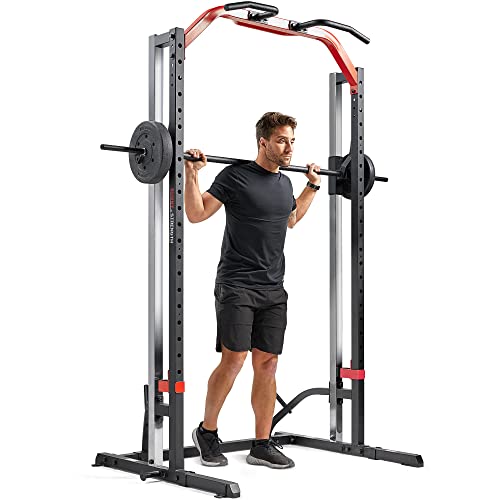
Sunny Health & Fitness Smith Machine Power Cage
This hybrid cage lets you do Smith machine rows one day and free-weight barbell rows the next, a practical way to vary back stimulus without buying two separate machines.
- Doubles as a power cage
- Smaller footprint than dedicated Smith rigs
- Solid uprights for pull-up work
- Carriage travel is shorter than full-size units
- Fewer safety-stop increments
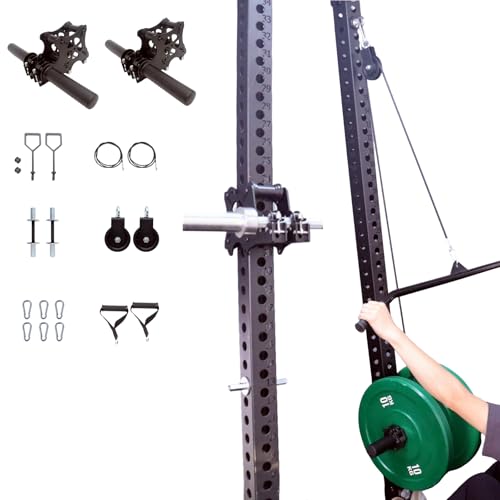
Yes4All Power Cage with Smith Machine Attachment
Buying the base cage first and adding the Smith attachment later spreads out the cost, and the attachment's build specs point to enough sturdiness for controlled back rows.
- Modular upgrade path
- Cage alone works great for barbell rows
- Good customer support reputation
- Attachment sold separately
- Setup instructions could be clearer

Signature Fitness Smith Machine with Cable Crossover
Having a cable crossover built into the same frame means you can superset Smith machine rows with straight-arm pulldowns without moving an inch, a genuine back-day upgrade on paper.
- Cable crossover adds pulldown and pullover options
- Solid frame with minimal wobble under load
- Good weight capacity for the price
- Takes up real floor space
- Cable pulleys need occasional lubrication
How we chose these smith machines
We looked at carriage smoothness (linear bearing versus bushing), how many hook positions each machine offers for rows and shrugs, whether the frame doubles as a power cage or pull-up station, real owner feedback on stability under heavier pulling loads, and price relative to build quality. We also factored in footprint, since back-day machines tend to be some of the largest pieces in a home gym.
Why train back on a Smith machine at all
The honest answer: it isolates. A free barbell row asks your spinal erectors and core to stabilize the bar while your back muscles do the pulling. That’s valuable training, but it also means fatigue and form breakdown show up fast, especially as reps climb. Lock the bar into a fixed vertical track and you can push closer to failure on rows, shrugs, and even Smith deadlifts with a lot less risk of the bar swinging off-path mid-set.
It’s also a great tool for people training around a lower-back issue, since you can angle the body and adjust hook height to reduce spinal loading while still hammering the lats.
The best smith machine back exercises
1. Smith machine bent-over row
Set the bar just below knee height. Hinge at the hips, keep a flat back, and pull the bar to your lower ribs. Because the bar can’t drift forward or back, you can focus entirely on driving your elbows behind your torso and squeezing your shoulder blades together at the top.
2. Smith machine inverted row
Set the bar at waist height, lie underneath it, and pull your chest to the bar with your body straight as a plank. This is one of the best beginner-friendly back builders because body angle lets you self-regulate difficulty just by walking your feet forward or back.
3. Smith machine shrug
Grip just outside shoulder width, stand tall, and shrug straight up without rolling your shoulders. The fixed track means the bar stays perfectly vertical, so you get a cleaner traps contraction than with a free barbell that tends to swing forward.
4. Smith machine deadlift (light to moderate loads)
Not a max-effort movement, but a controlled Smith deadlift at moderate weight is a solid way to hit the whole posterior chain, including lats, with less technical demand than a conventional pull.
5. Reverse-grip Smith row
Switch to an underhand grip and row toward your belly button. This puts greater focus on the lower lats and biceps, making it a good finishing move after heavier overhand rows.
A sample smith machine back workout
- Smith machine bent-over row: 4 sets of 8-10
- Smith machine inverted row: 3 sets to near failure
- Reverse-grip Smith row: 3 sets of 10-12
- Smith machine shrug: 3 sets of 12-15
- Smith machine deadlift (moderate load): 3 sets of 6-8
Between sets of rows and shrugs, rest for 60-90 seconds, while deadlift sets call for a 2 minute rest. For most lifters, doing two back-focused sessions per week on a Smith machine is sufficient, provided pulling work is included elsewhere during the week.
What to look for when buying
Carriage type
Carriages that run on linear bearings, such as the ones Titan uses, move smoothly and feel more like a free bar. Budget machines often use bushing-style carriages instead; these do the job but have a slightly stiffer feel, most noticeably during the opening reps of a cold set.
Hook positions and range
More hook increments mean more exercise variety, since bar height determines whether a movement leans toward a row, a shrug, or a deadlift variation.
Combo functionality
Several machines on our list double as a power cage or include a cable station. If floor space is tight, a combo unit gets you rows, pulldowns, and squats out of one frame instead of three.
Footprint and ceiling height
Smith machines are big. Measure your space, including clearance for the counterweight or cable stack, before you buy.
| Model | Carriage type | Combo features | Best for | Price |
|---|---|---|---|---|
| Titan Fitness T-3 Series | Linear bearing | Pull-up bar | Serious home lifters | $$$ |
| CAP Barbell Smith Machine | Bushing | None | First-time buyers | $$ |
| Fitness Reality X-Class | Guided track | None | Beginners | $$ |
| Sunny Health & Fitness Power Cage | Bushing | Power cage / pull-up | Small spaces | $$ |
| Yes4All Power Cage + Attachment | Bushing | Power cage | Modular buyers | $$ |
| Signature Fitness w/ Cable Crossover | Bushing | Cable crossover | Full back-day station | $$$ |
Related guides
- Best power racks for home gyms
- Home gym setups and buying guides
- Best barbells and plates
- Resistance training equipment guides
- Best weight benches
- Best adjustable dumbbells
- All buying guides
- How we rank equipment
Ready to build your back-day station?
Compare top-rated smith machines and find the right fit for your home gym.
Frequently asked questions
Is a Smith machine good for back training?
Yes. The fixed bar path removes the balance demand of free-weight rows and deadlifts, letting you focus more directly on contracting your lats, rhomboids, and traps, especially useful for higher-rep isolation work.
Can you do rows on a Smith machine?
Absolutely. Bent-over rows, inverted rows, and reverse-grip rows are all effective Smith machine back exercises, and the fixed track makes it easier to keep strict form under fatigue.
Is a Smith machine better than a barbell for back day?
Not better, just different. A barbell trains more stabilizer muscles, while a Smith machine isolates the target muscles more directly. Many lifters use both across a training week.
How much space does a home Smith machine need?
Most units need at least 6 to 7 feet of length and 4 to 5 feet of width, plus ceiling clearance for the frame. Combo units with cable stacks need extra depth.
What’s the difference between linear bearing and bushing Smith machines?
Linear bearing carriages glide more smoothly and feel closer to free weight, while bushing carriages are more affordable but slightly stiffer, especially on cold reps.
Can beginners use a Smith machine for back exercises?
Yes, it’s actually a great starting point since the guided bar path reduces the coordination demands of free-weight rows and deadlifts while you build strength and form.
How often should you train back on a Smith machine?
Two focused sessions per week, combined with other pulling work like pulldowns or rows elsewhere in your split, is enough for most lifters to see steady back development.
More Buying Guides
 Jump Rope Cardio Workout: The Ropes and Routines That Actually Deliver ResultsWhat Does a Mini Barbell Do? A Real-World Breakdown for Home Gyms
 Why Are Dumbbells So Expensive? What Actually Drives the Price in 2026
 The Best Barbell Tricep Workout Setup for Home Gyms in 2026How to Use Dumbbells: A Beginner’s Guide to Form, Weight, and Progression
 Stairmaster vs. Elliptical: Which Cardio Machine Actually Fits Your Home Gym?