Rowing Machine Exercise: What It Does for Your Body and Which Machine to Buy
Rowing machine exercise works your legs, back, core, and arms in a single continuous stroke, engaging roughly 85% of your total muscle mass while staying easy on your knees and hips. Full-body recruitment paired with low-impact movement explains why rowing keeps showing up on efficient-workout lists heading into 2026. It also explains why home rowers have gotten quieter, more compact, and better at connecting to workout apps. Below: what rowing machine exercise does for your body, how to perform the stroke correctly, and which machines are worth buying based on resistance feel, noise level, and what owners report after months of regular use.
The best rowing machines for a full-body workout

Concept2 Model D Indoor Rowing Machine
This is the machine you've likely seen at nearly every commercial gym, and its continuous chain-and-fan design is what owners consistently say makes the stroke feel closest to being on real water. The PM5 monitor tracks split times and calories with zero guesswork.
- Buttery-smooth chain-driven flywheel
- Splits into two pieces for storage
- Extremely durable, resells well
- Higher price than home-market rowers
- Air resistance is loud in small apartments

Sunny Health & Fitness SF-RW5515 Magnetic Rowing Machine
Owners consistently report the magnetic resistance runs nearly silent, which matters if you're rowing early mornings before work. It won't replicate a Concept2's feel, but for learning the stroke pattern it's a smart entry point.
- Very quiet magnetic resistance
- Comfortable padded seat
- Easy assembly, low price
- Resistance range feels limited at the top end
- Monitor is basic
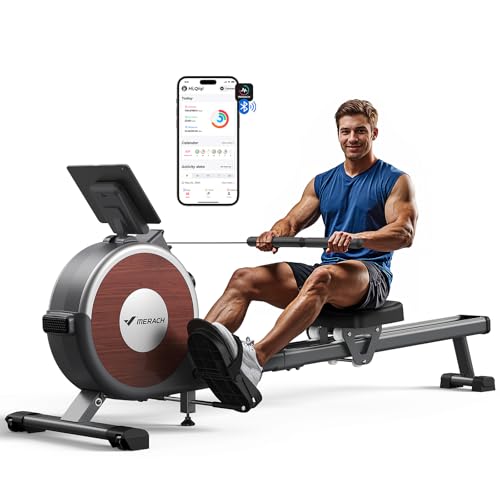
MERACH Foldable Magnetic Rowing Machine
It folds up and stands vertically in a closet corner, addressing the storage complaint most reviewers have with rowers in general. The app pairing adds structured workouts that keep beginners on track.
- Folds compact for storage
- App connectivity with guided rows
- Smooth magnetic resistance
- Seat rail is shorter, tight for tall rowers
- App requires phone mount

ECHANFIT Magnetic Rowing Machine 16 Levels
Sixteen resistance levels leave plenty of room to progress from an easy warm-up row to a genuinely tough interval session, and the LCD screen keeps stats simple and readable mid-stroke.
- Wide 16-level resistance range
- Large non-slip footrests
- Simple LCD display
- Frame flexes slightly at max resistance
- No app integration

Sunny Health & Fitness Obsidian Surge 500 Rower
Combining magnetic and air resistance puts this rower's stroke feel closer to Concept2 territory at a friendlier price point, and the built-in tablet holder makes following workout videos easy.
- Hybrid resistance feels natural
- Bluetooth app tracking
- Sturdy frame for hard intervals
- Louder than pure magnetic rowers
- Takes up more floor space
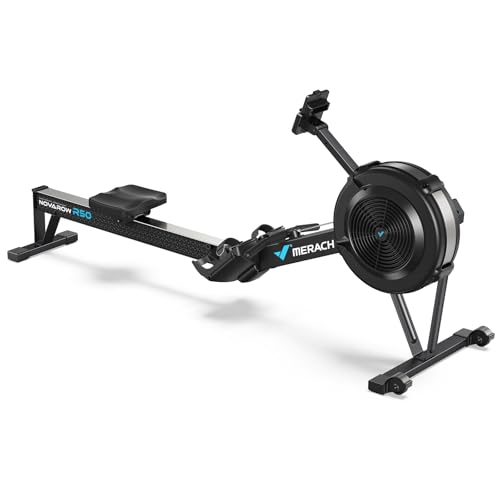
MERACH Air Rowing Machine
The air flywheel scales resistance with your effort just like a Concept2, which on paper keeps high-intensity intervals appropriately demanding instead of capping out at a fixed setting.
- Resistance scales with rowing intensity
- Solid build for the price
- Console tracks distance, calories, and pace
- Louder operation, not ideal for thin-walled apartments
- Assembly takes longer than magnetic models
How we chose
Resistance type and feel mattered most, whether air, magnetic, or hybrid. From there we looked at noise level for apartment use, seat rail length for taller users, monitor and app usefulness, storage footprint, and price against build quality. Reported performance under both easy steady-state rows and hard interval sessions factored in too. A rower can feel smooth at low effort and still fall apart under a sprint.
What muscles does rowing machine exercise work?
A proper rowing stroke breaks into four phases: catch, drive, finish, and recovery, and each one shifts the workload to a different muscle group:
- Legs (quads, glutes, hamstrings): The drive phase starts with a leg push, similar to a squat, and generates roughly 60% of your power.
- Core: Your abs and lower back stabilize the transition from legs to arms, which is why rowing doubles as a surprisingly effective ab workout.
- Back (lats, rhomboids, traps): The pull portion of the drive engages your entire posterior chain, making rowing a nice counterbalance to pressing-heavy routines.
- Arms and shoulders: The final arm pull at the finish, plus the grip throughout, works biceps, forearms, and rear delts.
Because the stroke sequences through all of these groups rather than isolating one, rowing burns a comparable or higher calorie rate than running at a similar perceived effort, with far less impact on your knees and hips.
How to do the rowing stroke correctly
Most of the frustration people have with rowing machines comes down to poor form, not the equipment. Here’s the sequence we coach beginners through:
1. The catch
Knees bent, shins vertical, arms extended, body leaned slightly forward. This is your loaded starting position.
2. The drive
Start each stroke by driving with your legs, then lean your torso back a little, and finish by pulling the handle in to your lower ribs with your arms coming in last. Legs, then hips, then arms, in that sequence, every time.
3. The finish
Legs flat, torso leaned back slightly, handle at your ribs, elbows past your body.
4. The recovery
Reverse the order: extend the arms first, hinge forward at the hips next, and finally bend the knees as you slide back to the catch. This phase should be slower and more controlled than the drive.
Beginners most often go wrong by rowing arms-first, turning what should be a leg-powered movement into an upper-body bicep curl and leaving most of the machine's potential unused.
Air, magnetic, or hybrid resistance: which should you buy?
| Resistance type | Feel | Noise | Best for |
|---|---|---|---|
| Air (flywheel/fan) | Scales with effort, most realistic on-water feel | Louder, whooshing sound | Serious training, interval work |
| Magnetic | Smooth, fixed resistance levels | Very quiet | Apartments, early-morning workouts |
| Hybrid (air + magnetic) | Closer to air feel with less noise | Moderate | Home gym owners wanting both |
| Water | Smooth, natural sound | Quiet swishing | Ambiance-focused buyers, lower priority for stats-tracking |
Building a rowing machine workout routine
You don’t need a complicated plan to see results. A few structures that work well on any home rower:
- Steady-state: 20-30 minutes at a conversational pace, 3-4 times a week, for aerobic base and calorie burn.
- Intervals: 8 rounds of 500m hard / 90 seconds easy, which builds power and conditioning fast.
- Pyramid: 1-2-3-4-3-2-1 minutes hard with equal rest, a classic rowing-specific finisher.
If your rower has a monitor, track meters and split time rather than just calories. Splits are the more reliable measure of effort and progress over weeks.
Who should (and shouldn’t) prioritize rowing
Rowing machine exercise suits people managing joint pain who still want intense cardio, runners looking for a low-impact cross-training option, and anyone building a full-body home gym without much floor space, since most modern rowers fold or stand upright. Chasing pure strength gains is where it falls short as a standalone plan. Pairing it with a few sessions on a power rack or a set of dumbbells covers that gap.
Related guides
- Best rowing machines for home use
- Building a complete home gym
- Cardio accessories worth owning
- Best exercise bikes compared
- Best ellipticals for low-impact cardio
- Recovery tools for after cardio sessions
- More buying guides
- How we rank equipment
Ready to start rowing at home?
See current prices on our top-rated rowing machines.
Frequently asked questions
Is rowing machine exercise good for weight loss?
Yes, a rowing stroke engages roughly 85% of your muscles, which burns calories efficiently for a given perceived effort, and it’s sustainable to do often because it’s low-impact on joints.
How many minutes a day should I row?
20-30 minutes of steady rowing 3-5 times a week is a solid starting target for most beginners; you can build to longer or add interval sessions as conditioning improves.
Does rowing build muscle or just cardio?
Both. The leg drive and back pull load muscle under resistance similar to compound lifts, so consistent rowing does build noticeable strength in the legs, back, and core alongside cardio benefits.
Is rowing bad for your back?
Rowing is generally back-friendly when the stroke sequence is correct (legs, then hips, then arms), but rounding your lower back at the catch or yanking with your arms first can cause strain over time.
What’s the difference between air and magnetic rowing machines?
Air resistance increases the harder you pull, giving a more realistic on-water feel but more noise; magnetic resistance is quieter with fixed levels, which suits apartments better.
Can beginners use a rowing machine every day?
Yes, since it’s low-impact, but keep early sessions moderate in length and intensity so you can focus on form before increasing volume.
How long until I see results from rowing machine exercise?
Most people notice improved conditioning and stamina within 3-4 weeks of consistent rowing, with visible muscle tone changes typically taking 6-8 weeks depending on frequency and diet.
More Buying Guides
 Jump Rope Cardio Workout: The Ropes and Routines That Actually Deliver ResultsWhat Does a Mini Barbell Do? A Real-World Breakdown for Home GymsHow to Do the Ski Erg Correctly: Technique, Common Mistakes, and Setup Tips
 The Best Treadmills for a 30-Minute Home Workout in 2026
 Types of Dumbbells: Which Style Actually Fits Your Home Gym in 2026
 Barbell Workouts You Can Actually Do at Home (And the Gear That Makes Them Work)