How to Do the Dumbbell Good Morning (Form Guide + Best Dumbbells for It)
The dumbbell good morning is a hip-hinge exercise that trains the hamstrings, glutes, and lower back. You load the hips with a dumbbell held at the chest or shoulders, then fold forward with a flat spine. It’s one of the most underrated posterior-chain movements you can do at home, and it doesn’t require a barbell or a squat rack to work safely. This is a hinge pattern, not a squat or press, so the dumbbells you use matter less for raw weight capacity and more for how easily you can adjust load in small increments and hold the bells securely through a slow eccentric. Below: proper form, common mistakes, and the dumbbells best suited to this movement based on their specs and how owners describe using them for hinge work.
The best dumbbells for good mornings and posterior-chain work

Bowflex SelectTech 552 Adjustable Dumbbells
The dial system lets you drop from a heavy deadlift-adjacent set straight down to a lighter good morning weight in seconds, which matters because most people need noticeably less load on this move than on squats.
- 5-52.5 lb range in one pair
- Compact footprint for home hinge work
- Quick weight changes between sets
- Pricier than fixed hex sets
- Handle shape takes a session to get used to

NÜOBELL 20-90 lb Adjustable Dumbbells
The block-style adjustment feels more like a traditional dumbbell in the hand than dial systems, which gives more confidence during a slow, controlled hinge with heavier loads.
- Solid, low-rattle feel during slow tempo reps
- Wide weight range for progression
- Compact stacking design
- Heavier and pricier at the top end
- Overkill for beginners just learning the pattern

PowerBlock Elite EXP Adjustable Dumbbells
The stacked-block shape stays narrow through the hand even at higher weights, which the spec sheet highlights as useful for keeping the dumbbells close to the body during the descent.
- Very small footprint per pound of weight
- Expandable if you need more load later
- Durable metal construction
- Selector pin needs a firm push to lock in
- Boxy shape isn't for everyone
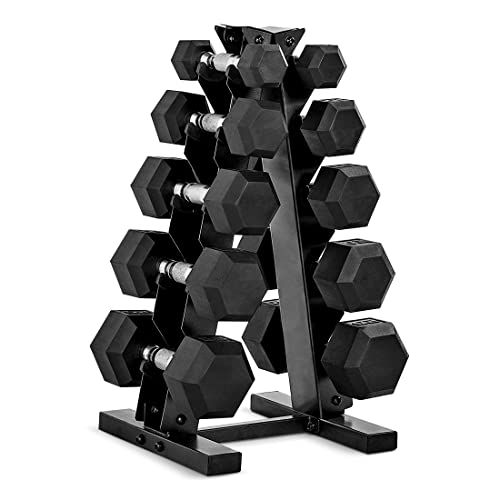
CAP Barbell Hex Dumbbell Set
A basic rubber hex set is genuinely enough to learn and drill good mornings, since the exercise is far more about hip control than raw load in the early stages.
- Very affordable per pound
- Hex shape won't roll on the floor
- Easy to find in light increments
- No adjustability, so you'll outgrow it
- Takes more storage space as you add pairs
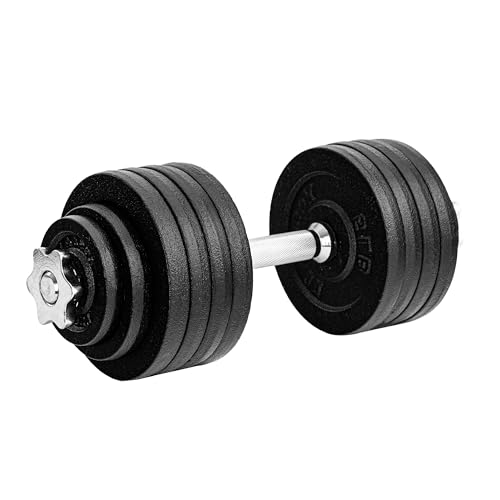
Yes4All Adjustable Dumbbells (Cast Iron Plates)
Loading and unloading plates is slower than a dial system, but that slower process encourages picking a conservative starting weight, which is exactly right for a new hinge pattern.
- Much cheaper than premium adjustables
- Enough range to progress slowly
- Sturdy spin-lock collars
- Changing weight is slower mid-workout
- Collars need periodic tightening

Amazon Basics Neoprene Dumbbell Set
These are commonly used for empty-bell-style warm-up sets and to teach the hip hinge pattern before adding real weight.
- Inexpensive and easy to grip
- Color-coded weights for quick identification
- Good for high-rep warm-up sets
- Tops out too light for progressed lifters
- Neoprene coating wears over years of use
How we chose
We evaluated dumbbells specifically through the lens of hinge work. That means how the handle design is rated for comfort during a slow forward lean, how quickly the listed adjustment system lets you change weight between warm-up and working sets, and how stable the load is reported to feel held at the shoulders, chest, or hanging in front of the hips, three common good morning variations. Price got weighed against how much adjustability actually matters for this exercise too, since good mornings usually need lighter loads than squats or deadlifts done with the same dumbbells.
How to do the dumbbell good morning correctly
Setup
Hold one dumbbell upright against your chest using both hands, or position two lighter dumbbells at shoulder height as you would in a front squat rack setup. Keep your feet hip-width apart, knees slightly bent, and spine neutral. Since most home lifters don't require much load for this exercise, begin with less weight than you'd expect to need.
The movement
Send your hips backward, almost like shutting a car door using your glutes, while your shins remain close to vertical and your knees stay only slightly bent. Allow your upper body to tilt toward the ground as you maintain a flat spine, avoiding any rounding. Once you feel a solid stretch in your hamstrings, reverse the motion by pushing your hips forward to return to standing, squeezing your glutes as you finish.
Common mistakes
Rounding the lower back to reach further down is the most frequent error; range of motion should come from hip mobility, not spinal flexion. Bending the knees too much is the second, since it turns the movement into a squat and takes tension off the hamstrings. Loading up too soon is the third mistake: the hinge pattern needs to be grooved with light weight before any real load gets added.
How much weight should you use?
Because good mornings place the load on the spine and hips through a longer lever arm, most people should begin with 10-20% of the weight they would handle for a dumbbell Romanian deadlift. That is precisely where adjustable dumbbells earn their place: within a single workout, you can quickly reduce the weight when moving from a heavier lift such as a goblet squat to a lighter, more technical set of good mornings.
| Dumbbell type | Best for good mornings | Adjustability | Typical price |
|---|---|---|---|
| Dial-style adjustable (Bowflex, NÜOBELL) | Mixed sessions needing quick weight drops | High, seconds to change | $$$ |
| Block-style adjustable (PowerBlock) | Small spaces, progressive loading | High, compact | $$ |
| Fixed hex dumbbells (CAP, Amazon Basics) | Beginners learning the pattern | None, buy multiple pairs | $ |
| Plate-loaded adjustable (Yes4All) | Budget lifters progressing slowly | Medium, manual loading | $ |
Programming good mornings into a home workout
Good mornings pair well as an accessory movement after a main hinge or squat lift, typically for 3 sets of 8-12 reps with a light-to-moderate dumbbell. They’re also useful as a warm-up primer to activate the glutes and hamstrings before heavier deadlifts or squats done later in the same session, whether on a flat bench, in a home power rack, or with a barbell setup.
Related guides
- Best adjustable dumbbells for home gyms
- Best kettlebells for hip hinge training
- Best barbells and plates for deadlifts
- Best weight benches for accessory lifts
- Resistance bands and hinge accessories
- Building a complete home gym
- More training guides
- How we rank fitness equipment
Ready to try dumbbell good mornings?
See today's price on the NUOBELL adjustable dumbbells, our top pick for hinge work.
Frequently asked questions
Is the dumbbell good morning safe for beginners?
Yes, as long as you start very light and prioritize a flat back and hip hinge over range of motion. It’s smart to practice the pattern with no weight first.
How heavy should my dumbbells be for good mornings?
Most lifters should start with 10-20 lb total and progress slowly, since this exercise loads the spine at a long lever arm and doesn’t need heavy weight to be effective.
Can I do good mornings with just one dumbbell?
Yes, holding a single dumbbell vertically against your chest works well and is often easier to balance than two separate dumbbells.
What muscles does the dumbbell good morning work?
It primarily targets the hamstrings, glutes, and lower back (erector spinae), with secondary engagement of the core for stability.
Are adjustable dumbbells worth it just for good mornings?
If you only did good mornings, probably not, but since adjustable dumbbells cover squats, presses, and rows too, the versatility makes them worth it for most home gyms.
How is a good morning different from a Romanian deadlift?
Good mornings are typically done with the load at the shoulders or chest rather than in the hands, which shifts more of the challenge to the upper back and core stability.
How many sets and reps should I do?
3 sets of 8-12 reps as an accessory movement works well for most people, done after a main squat or deadlift movement.
Can good mornings replace deadlifts?
No, they’re best used as a complementary accessory exercise to build hip hinge strength and hamstring flexibility, not as a full replacement for heavier hinge lifts.
More Buying Guides
 Jump Rope Cardio Workout: The Ropes and Routines That Actually Deliver ResultsWhat Does a Mini Barbell Do? A Real-World Breakdown for Home Gyms
 Stairmaster vs. Elliptical: Which Cardio Machine Actually Fits Your Home Gym?How to Do the Ski Erg Correctly: Technique, Common Mistakes, and Setup Tips
 The Best Treadmills for a 30-Minute Home Workout in 2026
 Types of Dumbbells: Which Style Actually Fits Your Home Gym in 2026