Kettlebell Snatch Workout: The Best Kettlebells and How to Program It
The best kettlebell for a snatch workout is one with a smooth, slim handle and a wide, stable base, bells with rough castings or narrow handles tend to chew up your palms long before your conditioning gives out. If you want to snatch at home in 2026, the equipment matters more than it does for slower lifts like presses or squats, since the bell flips over your hand hundreds of times a session. This guide covers which kettlebells actually hold up to snatch volume, how to program a snatch at home routine safely, and what to look for before you buy, so you can build real work capacity in under 20 minutes a session without wrecking your grip in week one.
The best kettlebells for snatch workouts we recommend

Yes4All Cast Iron Kettlebell
The listing specifies a wide, smooth handle that owners say holds up better on high-rep snatches than rougher cast handles, and the flat base is designed to keep it from rolling once it's set down between sets.
- Smooth handle reduces callus tearing
- Wide range of weights sold individually
- Flat, stable base
- Paint chips with heavy floor drops
- Handle diameter varies slightly by weight

CAP Barbell Cast Iron Kettlebell
A no-frills bell that's well suited to learning the hip-hinge and hand-insertion pattern before investing in something more refined.
- Very affordable per pound
- Wide weight range available
- Durable enough for daily use
- Handle is thicker and rougher than premium bells
- Powder coat wears faster

Kettlebell Kings Powder Coat Kettlebell
The textured powder coat is built for a secure grip even with sweaty hands mid-EMOM, and owners note the handle geometry feels kinder to the wrist during the flip-over at the top of the snatch.
- Excellent grip texture when sweaty
- Handle shape reduces wrist bang
- Consistent sizing across the weight line
- Pricier than basic cast iron options
- Limited availability at lighter weights

ProsourceFit Vinyl Coated Kettlebell
The vinyl coating is designed to quiet the clank when the bell is set down between snatch reps and to protect hardwood or garage epoxy from chips.
- Vinyl coating protects floors
- Color-coded by weight
- Quiet on set-down
- Coating can peel over years of hard use
- Handle feels slightly narrower than cast iron bells

REP Fitness Kettlebell
A single-piece cast design with a consistent handle diameter across the weight range, according to the spec sheet, so the grip feel stays the same as you size up.
- Consistent handle sizing across weights
- Solid single-piece casting
- Holds up to daily garage-gym use
- Limited stock availability at times
- Only sold in select weight increments
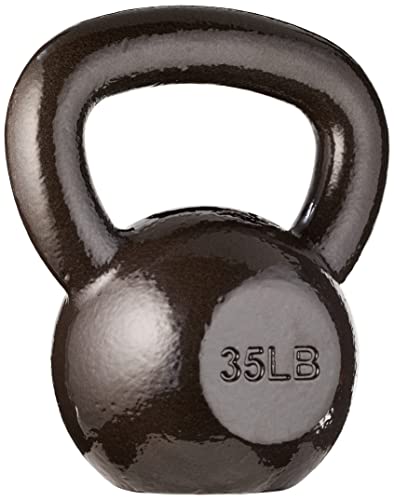
Amazon Basics Cast Iron Kettlebell
Nothing fancy, but a reasonable option for trying snatch mechanics at low volume before committing to a heavier or more refined bell.
- Low cost of entry
- Widely available
- Flat base sits well on most floors
- Rougher handle finish
- Not ideal for high-rep sessions long term
How we chose
We prioritized handle finish and diameter consistency across weights, base stability for rack-and-drop transitions, and how owners consistently report the bell holding up after repeated high-rep sets, since snatch workouts put more cumulative stress on a kettlebell’s handle and coating than slow grinds like goblet squats or presses. We also factored in price per pound, since most lifters end up owning two or three snatch-specific weights rather than one bell.
What makes a kettlebell good for snatches specifically
Handle diameter and finish
At the top of the snatch, the bell flips over in your hand, which means a handle that's overly thick or coarse will shred your palms in short order, chalk or gloves notwithstanding. Bells built in competition style, with handles that are a touch smaller and smoother, generally hold up better through high-rep snatch sets compared to the chunky cast-iron handles designed for grinding lifts.
Base stability
Between sets you’ll be setting the bell down and picking it back up constantly. A wide, flat base that doesn’t wobble or roll saves you from awkward re-grips mid-workout.
Weight increments
Snatch workouts are usually done with a lighter bell than your press or squat weight, since you’re chasing reps and cardio output, not a 1RM. Look for a kettlebell line sold in small weight jumps (4-9 lb increments) so you can dial in the right load instead of jumping from too light to too heavy.
Sample kettlebell snatch workout
| Format | Work | Rest | Best for |
|---|---|---|---|
| EMOM | 10 snatches per arm at the top of each minute | Remainder of the minute | Building work capacity |
| 10-9-8…1 | Descending ladder, alternating hands each round | As needed | Time-efficient finisher |
| Tabata | 20 seconds on, 10 seconds off, 8 rounds | 10 seconds | Short, brutal conditioning |
| 5-minute snatch test | Max reps in 5 minutes, switch hands as needed | None | Benchmarking progress |
Programming and safety notes
Begin with less weight than you assume you'll require. High-rep snatches can usually be done with a much lighter bell than what you'd press, and your grip will wear out sooner than expected, a bell that slips near the top of the movement is a frequent cause of forearm bruising among lifters. For most people, chalk works better than gloves, since gloves make the handle feel bulkier and alter its position in your palm during the flip.
Related guides
- Best kettlebells for home gyms
- Best adjustable dumbbells
- Resistance training equipment guide
- Recovery tools for post-workout grip and forearm care
- More TalkGyms buying guides
- How we rank fitness gear
Ready to start snatching?
See current prices on the kettlebells we recommend for snatch workouts.
Frequently asked questions
What weight kettlebell should I use for snatches?
Most men start around 35 lb (16 kg) and most women around 18-26 lb (8-12 kg) for reps, but the right weight is whatever lets you keep clean form for the full set without the bell crashing at the top.
Is the kettlebell snatch bad for your shoulders?
It can be if your form breaks down or you use too heavy a bell too soon. Keeping the elbow soft and letting the bell float into the overhead position rather than punching it up reduces shoulder strain.
How often can I do a kettlebell snatch workout?
Two to three times a week is plenty for most people, since the grip and forearm fatigue takes time to recover from between sessions.
Do I need a special kettlebell for snatches or can I use any kettlebell?
You can snatch with any kettlebell, but competition-style bells with a smoother, more consistent handle are noticeably easier on your hands during high-rep sets.
Should I wear gloves for kettlebell snatches?
Most experienced lifters prefer chalk over gloves, since gloves add thickness that can make the handle feel bulkier and less predictable mid-flip.
How long should a kettlebell snatch workout be?
Many effective sessions run 10-20 minutes total, since the snatch is demanding enough that longer sessions usually mean the pace or load has to drop.
Can beginners do kettlebell snatches safely?
Yes, but beginners should master the kettlebell swing and clean first, since the snatch builds directly on those hip-hinge and hand-insertion patterns.
More Buying Guides
 Jump Rope Cardio Workout: The Ropes and Routines That Actually Deliver ResultsWhat Does a Mini Barbell Do? A Real-World Breakdown for Home GymsHow to Do the Ski Erg Correctly: Technique, Common Mistakes, and Setup Tips
 The Best Treadmills for a 30-Minute Home Workout in 2026
 Types of Dumbbells: Which Style Actually Fits Your Home Gym in 2026
 Rowing Machine Exercise: What It Does for Your Body and Which Machine to Buy