How Do Adjustable Dumbbells Work? The Mechanisms Explained (Plus Our Top Picks)
Adjustable dumbbells work by using an internal locking mechanism: a rotating dial, a sliding pin, or a manual spin-lock collar: to select which plates or blocks travel with the handle when you lift it, letting one dumbbell stand in for an entire rack. If you’ve ever picked up a tray-based dumbbell and wondered how do adjustable dumbbells work well enough to hold a locked weight through a full set, the answer comes down to three competing systems: dial-turn selectors, pin-and-block designs, and old-school plate-loading. Each trades off speed, footprint, and price differently, and understanding which one you’re buying matters more than any marketing claim. Below, we break down how each mechanism functions, then rank the sets worth buying on Amazon for 2026.
The best adjustable dumbbells we recommend and recommend

Bowflex SelectTech 552
The dial-turn mechanism here is the industry standard for a reason, a quarter twist and a lift gets you a new weight in under three seconds. Owners consistently report the tray cradle stays sturdy and the handle knurling holds up well after years of regular use.
- Fast, reliable dial adjustment
- Compact single-unit design
- Huge aftermarket support and reviews
- Boxy handle shape isn't ideal for very small hands
- Plastic shell can scuff if dropped

NÜOBELL Adjustable Dumbbells
NÜOBELL uses a similar dial-selector idea to Bowflex but stacks real steel plates instead of a molded shell, so the weight feels denser and the handle stays a consistent length at every setting, a small detail that matters mid-set.
- Consistent handle length regardless of weight
- Steel construction feels closer to iron plates
- Quiet plate-to-plate contact
- Premium price
- Heavier trays are bulkier to move

PowerBlock Elite EXP
Instead of a dial, PowerBlock uses a pin-and-block system, you slide a selector pin through a stack of nested rectangular blocks, and only the blocks below the pin come along. The published footprint is noticeably smaller than dial-style sets.
- Smallest footprint of any adjustable dumbbell style
- Expandable weight range with add-on kits
- Very durable metal blocks
- Boxy shape feels different from round dumbbells
- Pin selection is slightly slower than a dial twist
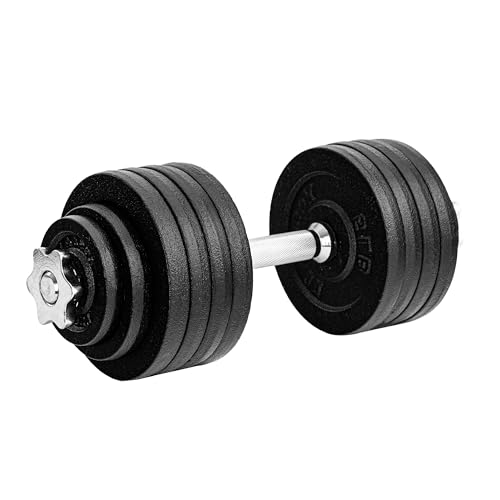
Yes4All Adjustable Dumbbells
This set uses a simplified dial-selector mechanism with a coated plate stack. It's not as buttery-smooth as pricier options, but the locking pin engages solidly, and owners consistently report it holds up fine for home use at a fraction of the cost.
- Budget-friendly entry into adjustable dumbbells
- Adjustment mechanism is simple and reliable
- Compact tray storage
- Coating can wear with heavy daily use
- Lower max weight than premium sets

CAP Barbell Adjustable Dumbbell Set
This is the manual, non-selectorized style: you thread plates onto a bar handle and tighten a spin-lock collar. It's the most old-school way adjustable dumbbells work, and it's genuinely useful for understanding the mechanics before spending more.
- Very affordable
- Simple mechanical design, easy to understand and repair
- Plates can be added individually over time
- Manual loading is slower than dial or pin systems
- Collars need periodic tightening checks
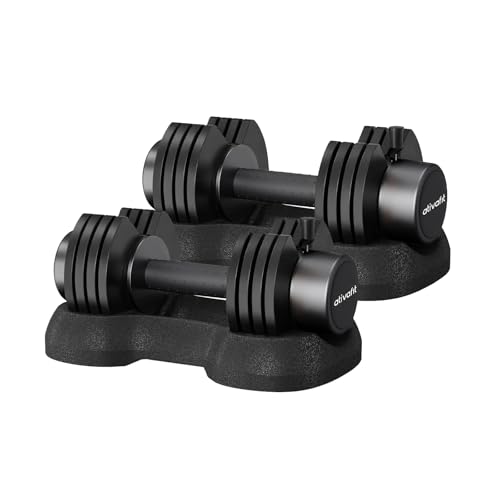
ATIVAFIT Adjustable Dumbbell
ATIVAFIT's dial mechanism is a solid middle ground, smoother than the cheapest sets, without the cost of premium steel-stack designs. Owners note the locking pin gives a reassuring click when it's fully seated.
- Good balance of price and adjustment speed
- Sturdy plastic tray for storage
- Clear weight markings on the dial
- Handle grip is thinner than some competitors
- Some reported rattle at lighter settings

FLYBIRD Adjustable Dumbbell
FLYBIRD's single-dumbbell dial design keeps the tray small, which matters if you're storing it in a closet or under a bed. The mechanism is straightforward, and owners report the click-lock feels secure across the weight range.
- Small, apartment-friendly storage tray
- Quick dial adjustment
- Reasonably priced for the convenience
- Only sold as a single unit in some listings
- Weight range is more limited than PowerBlock or NÜOBELL
How we chose
We focused on sets that are widely available on Amazon, have a meaningful volume of verified owner feedback, and represent each of the major adjustment mechanisms: dial-turn, pin-and-block, and manual plate-loading, so you can compare how the underlying design affects daily use, not just the price tag. We also considered handle comfort, tray durability, and range-of-motion feel as reported by verified owners, since that’s where cheaper adjustable dumbbells often fall short.
The core question: how do adjustable dumbbells work?
Every adjustable dumbbell tackles the same challenge: making a single handle stand in for many different weights, yet manufacturers have really only found three ways of doing this well enough to bring to market at scale.
1. Dial-turn selector systems
When people think of "adjustable dumbbells," this is usually the design that comes to mind, made famous by Bowflex's SelectTech line and later improved on by brands such as NÜOBELL. The dumbbell rests in a tray, made of plastic or metal, that holds a series of stacked plates. Each of these plates includes a small notch or slot. Turning the dial at the end of the handle causes a selector pin to rotate and engage with the notches of whichever plates you've chosen, while the remaining plates stay locked in place in the tray. When you lift the handle upward, only the plates you selected come with it, since the pin isn't connected to the others, leaving them behind.
The appeal is speed. You can change weight in two or three seconds without touching a single loose plate. The trade-off is that these dumbbells only work correctly when set down squarely on their tray; setting them down at an angle or missing the tray can jam the mechanism or, in rare cases, damage the locking pin.
2. Pin-and-block (selectorized block) systems
PowerBlock popularized this style, and it works on a similar locking principle but with a totally different shape. Instead of round plates, you have rectangular metal blocks nested inside one another. A selector pin slides horizontally through a hole at a chosen depth in the stack. When you lift the handle, everything above the pin’s position comes with it, and everything below stays put on the base. Because the blocks nest inside each other rather than sitting on a tray, the whole unit stays compact, often half the footprint of a dial-style dumbbell at the same max weight.
The trade-off is shape: a rectangular block doesn’t feel exactly like a round dumbbell head, which some lifters notice during moves like renegade rows or floor presses where the dumbbell rests against the ground.
3. Manual plate-loading systems
This is the original adjustable dumbbell design, still sold today by budget brands like CAP Barbell and Amazon Basics. There’s no dial or pin: just a short bar handle, a set of plates with holes drilled through the center, and a spin-lock or clamp collar on each end. You physically slide plates onto the bar and tighten the collar to hold them in place.
It’s the slowest method to change weight, since you’re threading plates by hand between sets, but it’s also the most mechanically simple, the cheapest to manufacture, and arguably the easiest to repair, there’s no internal selector mechanism that can wear out or jam.
Why the mechanism matters more than the marketing
The system a dumbbell uses affects three things you’ll notice within the first week of ownership: how fast you can change weight mid-workout, how compact the set is in storage, and how the weight actually feels in your hand through a full rep. Dial systems win on speed. Pin-and-block systems win on footprint. Manual systems win on cost and simplicity. None of them is objectively “better”: the right choice depends on whether you’re more constrained by time, space, or budget.
Durability differences worth knowing
Because dial and pin systems rely on a moving selector engaging small notches, dropping the dumbbell: especially at an angle, off the tray, is the single biggest cause of mechanism failure people report. Manual plate-loading dumbbells have far less that can go wrong internally, since the only moving part is a threaded collar, but they require you to check that collars are tight before every set, since a loose collar is its own safety issue.
Comparing the three mechanisms
| Mechanism | Adjustment speed | Footprint | Typical price | Best for |
|---|---|---|---|---|
| Dial-turn selector | Fastest (2-3 seconds) | Medium-large tray | $$-$$$ | Frequent weight changes, supersets, dropsets |
| Pin-and-block | Fast (3-5 seconds) | Smallest, most compact | $$-$$$ | Small apartments, garages with limited space |
| Manual plate-loading | Slowest (30-60 seconds) | Depends on plate storage | $ | Budget buyers, simple mechanics, occasional adjustment |
Do adjustable dumbbells work as well as fixed dumbbells?
For strength training purposes, yes: once the mechanism is locked, you’re lifting a solid, fixed weight just like a traditional dumbbell. The difference shows up in feel and speed, not in resistance quality. A dial or pin-selector dumbbell locked at 30 pounds behaves identically to a fixed 30-pound dumbbell during the lift itself; the only variable is how quickly and conveniently you got there. If you’re pairing yours with a full setup, our home gym guide and weight bench picks can help you round out the space.
Signs a mechanism is wearing out
- The dial or pin feels loose or doesn’t click firmly into position
- Plates rattle or shift slightly during a lift, even when locked
- The selector is hard to turn or requires excessive force
- Visible gaps between plates that weren’t there when new
Any of these are worth addressing before continuing to use the dumbbell at heavier weights, since a partially engaged mechanism is the main safety risk with adjustable designs.
Related guides
- Best adjustable dumbbells for home gyms
- Best adjustable kettlebells
- Best adjustable weight benches
- Building a home gym on a budget
- Resistance training equipment guide
- Best power racks for home use
- How we rank fitness equipment
- More buying guides
Ready to try adjustable dumbbells?
See current prices and availability on our top-rated picks.
Frequently asked questions
How do adjustable dumbbells lock at a specific weight?
Most use either a rotating dial that drives a selector pin into notched plates, or a sliding pin that passes through a stack of nested blocks. Manual designs use a threaded spin-lock collar instead of any internal selector.
Do adjustable dumbbells work as well as regular dumbbells for building muscle?
Yes: once locked at a given weight, the resistance behaves identically to a fixed dumbbell of the same weight. The mechanism only affects how quickly you can change weights, not the quality of the resistance during a lift.
Can the dial or pin mechanism break over time?
It can, especially if the dumbbell is dropped at an angle or set down off its tray repeatedly. Manual plate-loading designs have less to break internally since there’s no selector mechanism, only a tightening collar.
Are pin-and-block adjustable dumbbells as comfortable as round dumbbells?
They function the same during most lifts, though the rectangular shape can feel different during exercises where the dumbbell rests against the floor or your body, like renegade rows.
Why do some adjustable dumbbells feel heavier than their labeled weight?
This is usually a perception effect from handle thickness or balance point, not an actual weight discrepancy, the internal plates are still calibrated to the labeled total.
Is it safe to drop adjustable dumbbells on the floor?
Manufacturers generally advise against it. Dial and pin systems can jam or misalign if dropped, especially at an angle, so it’s best to lower them onto their tray or a padded surface.
How often should I check an adjustable dumbbell’s mechanism?
A quick visual and function check every few weeks of regular use is reasonable: listen for rattling, confirm the dial or pin clicks fully into place, and tighten any collars on manual designs.
More Buying Guides
 Jump Rope Cardio Workout: The Ropes and Routines That Actually Deliver ResultsWhat Does a Mini Barbell Do? A Real-World Breakdown for Home GymsBarbell vs. Dumbbell: Which One Should Anchor Your Home Gym?
 Why Are Dumbbells So Expensive? What Actually Drives the Price in 2026
 The Best Barbell Tricep Workout Setup for Home Gyms in 2026How to Use Dumbbells: A Beginner’s Guide to Form, Weight, and Progression