Garage Gym Flooring: What Actually Holds Up Under Barbells and Bumper Plates
The best flooring for a garage gym is thick rubber, whether that’s rolls, heavy-duty tiles, or horse stall mats. Only real rubber absorbs the impact of dropped barbells and bumper plates without cracking the slab underneath. More people are building home gyms into garages, basements, and sheds this year, and the flooring under the rack ends up mattering almost as much as the rack itself. It protects your concrete, quiets a dropped plate so you’re not rattling the whole house, and gives you traction bare concrete never will. This guide covers the real options: rubber rolls, interlocking tiles, foam mats, and the classic cheap garage gym flooring trick of using horse stall mats. The goal is matching flooring to what you’re actually lifting.
The garage gym flooring we'd actually put under a rack

Signature Fitness 3/8-Inch Rubber Flooring Rolls
Owners consistently report that this rolls out flat quickly and resists curling at the seams once it settles in. At 3/8 inch, it's thick enough that dropped plates don't rattle the whole slab.
- Seamless coverage, no tile gaps to catch a barbell
- Dense enough to quiet dropped weights
- Cuts easily with a utility knife for odd corners
- Heavy rolls are a two-person carry
- Fresh rubber smell lingers for a week or two
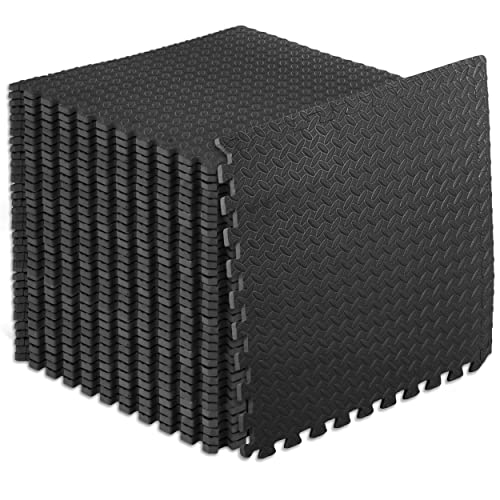
ProsourceFit Puzzle Exercise Mat
These interlocking tiles are designed for quick installation with just a rubber mallet and a utility knife, and owners describe them as forgiving enough for burpees and yoga between lifting sessions.
- No tools beyond a mallet and knife needed
- Cushions joints better than hard rubber
- Easy to pull up and take with you if you move
- Edges can curl in humid garages
- Not rated for heavy barbell drops

CAP Barbell High-Density Foam Tiles
These are a good fit under a power tower or adjustable bench in a corner of a garage. They're not meant for barbell work, but for bodyweight and dumbbell sessions the listing and owner reviews suggest they're plenty.
- Lowest price per square foot on this list
- Lightweight, easy for one person to lay
- Interlocking edges hide seams well
- Foam compresses and dents under heavy dumbbells left in place
- Won't survive Olympic lifting drops

4x6 Rubber Stall Mats
Borrowed from the horse-barn supply aisle, these thick mats are the classic cheap garage gym flooring hack for a reason, owners who use them under barbells report almost no bounce or noise from loaded bar drops.
- Best noise and impact dampening for the price
- Extremely durable, made for livestock stalls
- Cheapest option per square foot for real rubber thickness
- Very heavy and awkward to move alone
- Strong rubber smell that takes weeks to fade
- Usually needs a local farm store run, not always Amazon-stocked

Yes4All Interlocking Foam Mats
These work well under a rowing machine or exercise bike, and owners report they do a good job keeping equipment from sliding on a smooth concrete floor.
- Soft underfoot for stretching and mobility work
- Budget-friendly for covering cardio equipment footprints
- Simple to wipe down and clean
- Too soft for stability under a squat rack
- Corners lift over time with heavy foot traffic

Signature Fitness 1-Inch Heavy Duty Rubber Tiles
At 1-inch thick, these are built for placement directly under a squat stand where plates get dropped from the top of a clean, and owners report the concrete underneath still looks brand new after heavy use.
- Thickest option here, built for repeated drops
- Interlocking tabs keep tiles from shifting under a rack
- Protects concrete better than any roll or foam on this list
- Priciest per square foot
- Overkill for cardio-only areas
How we chose
We ranked flooring the way garage owners actually use it. Does it stay flat once it’s down, based on owner reports? Does the published thickness translate into real noise reduction? Can it hold up to a squat rack sitting in one spot for months, according to long-term feedback? And can a normal person install it without renting tools? Cost per square foot mattered too, since flooring a full two-car garage adds up fast. Cheap garage gym flooring options deserve a fair look next to premium rubber, not an automatic dismissal.
Rubber rolls vs. Interlocking tiles vs. Foam mats
Rubber rolls
Rolled rubber flooring gives you a seamless surface with no tile gaps for a barbell to catch on. It’s the closest thing to a commercial gym floor, and the best all-around pick for a garage that mixes barbell training, dumbbells, and general strength work. The tradeoffs are real: a single roll can weigh well over 100 pounds, and it carries a rubber smell for the first week or two before ventilation clears it out.
Interlocking rubber or foam tiles
Tiles are the easiest DIY option because you can carry, cut, and swap individual pieces without moving the whole floor. Foam tiles like the CAP Barbell or Yes4All options here are great under cardio equipment or for bodyweight training, but they compress and dent under sustained dumbbell or plate weight, so they’re not a good match for a squat rack footprint. Denser rubber interlocking tiles, like the Signature Fitness heavy-duty version, handle real barbell drops much better.
Horse stall mats
This is the classic cheap garage gym flooring hack, and it earns its reputation. Stall mats are built to survive livestock standing and stomping on them for years, so dropped bumper plates and kettlebells barely register by comparison. Few options at a similar price hold up as well. The catch: they’re heavy, awkward for one person to carry, and not always in stock on Amazon. A local farm or tractor supply store is often the faster route.
How thick should garage gym flooring be?
| Use case | Recommended thickness | Best flooring type |
|---|---|---|
| Cardio equipment (bike, rower, elliptical) | 1/4″ – 1/2″ | Foam interlocking tiles |
| Dumbbells and general strength training | 1/2″ – 3/4″ | Rubber rolls or puzzle mats |
| Power rack with barbell drops | 3/4″ – 1″+ | Heavy-duty rubber tiles or stall mats |
| Olympic lifting platform | 2″ combined (mat + wood) | Stall mats under a plywood platform |
Protecting the slab underneath
Repeated impacts from dropped plates can cause concrete garage floors to crack, particularly in colder climates where the slab has already endured some freeze-thaw stress. Using thicker rubber accomplishes more than just reducing noise. It disperses the force of impact so the slab avoids a direct hit each time a bar lands. For anyone operating a power rack or performing Olympic lifts, it makes sense to install substantial thickness specifically under that footprint, even if lighter flooring suffices for the rest of the garage.
Noise and neighbors
When your garage gym is located beneath a bedroom or shares a wall with neighbours, cutting down on noise is just as important as protecting the slab. Denser rubber, whether in rolls or 1-inch tiles, does a much better job of absorbing the impact of a dropped kettlebell or barbell than foam tiles, which tend to pass the impact through rather than dampen it. Stall mats perform well in this respect too, particularly considering the price.
Installation and maintenance tips
- Let rubber flooring off-gas in a ventilated space for a few days before final placement if the smell bothers you.
- Use interlocking tiles’ factory edges around the perimeter and cut the tabs only where the mat meets a wall.
- Sweep or vacuum regularly, rubber grit tracked from tiles can scratch treadmill belts and bike flywheels.
- Leave small gaps (not full seams) at the edges in hot garages, since rubber expands slightly in high heat.
Related guides
- More home gym buying guides
- Best power racks to put on top of your new flooring
- Full home gym setup guides
- Weight benches that pair well with a home gym floor
- Barbells and plates for your garage setup
- Dumbbells worth putting on rubber flooring
- How we rank gear at TalkGyms
- About TalkGyms
Ready to floor your garage gym?
Compare rubber rolls, tiles, and budget stall mats before you order.
Frequently asked questions
What is the cheapest garage gym flooring option?
Horse stall mats are typically the cheapest per square foot for real rubber thickness, followed by basic foam interlocking tiles for lighter-duty use.
How thick should garage gym flooring be for a power rack?
Aim for at least 3/4 inch, and ideally 1 inch or a stacked stall mat setup, directly under the rack footprint where plates get dropped.
Can I put garage gym flooring over carpet?
It’s better to remove carpet first if possible, since padding underneath can shift and make heavy equipment unstable; a bare concrete or subfloor base is more reliable.
Do rubber gym mats smell bad when new?
Yes, most new rubber flooring has an off-gassing smell for one to two weeks that fades with ventilation; foam tiles tend to have less odor than dense rubber.
Is interlocking foam or rubber flooring better for a garage gym?
Foam is fine for cardio and light bodyweight work but compresses under heavy weight; rubber tiles or rolls are the better choice under barbells and dumbbells.
How much garage gym flooring do I need for a home gym?
Measure the footprint of your rack, bench, and any cardio machines, then add at least a foot of buffer on each side for safe movement and dropped weight.
Will garage gym flooring protect my concrete from cracking?
Thick rubber flooring significantly reduces impact stress on concrete, but it won’t fully prevent damage from very heavy repeated drops without adequate thickness.
More Buying Guides
 Jump Rope Cardio Workout: The Ropes and Routines That Actually Deliver ResultsWhat Does a Mini Barbell Do? A Real-World Breakdown for Home Gyms
 Rowing Machine Technique: A Buyer’s Guide to Getting the Stroke Right at Home
 Pilates Workout Equipment: The Gear Worth Buying for a Home StudioHow to Build a Garage Gym Setup That Actually Works in 2026
 Barbell Bicep Curl: How to Do It Right and the Best Bars for It