Forearm Workouts With Dumbbells: The Best Sets for Grip and Wrist Strength
The best dumbbells for forearm workouts are adjustable sets that drop down to 5-10 lbs in seconds, since wrist curls and reverse curls need far less load than biceps or shoulder work. In 2026, more home lifters are treating grip and wrist strength as its own training priority instead of a side effect of rows and deadlifts. The upside is you don’t need specialty gear: one pair of dumbbells, adjustable or fixed, covers wrist curls, reverse curls, hammer curls, farmer carries, and wrist rotations. Below we break down the dumbbell sets best suited to this kind of training based on published specs and owner feedback, followed by a full guide to programming forearm and grip work at home.
The best dumbbells for forearm training we recommend

Bowflex SelectTech 552 Adjustable Dumbbells
The dial system lets you drop from 25 lbs to 5 lbs in seconds, which matters a lot for forearm work since wrist curls need way less weight than biceps curls. The handle is knurled enough to challenge grip without tearing up your palms.
- Quick weight changes between exercises
- Compact footprint for home use
- Handle diameter works well for wrist curls
- Boxy shape less natural for farmer carries
- Pricier than fixed hex dumbbells

NÜOBELL Adjustable Dumbbells
NÜOBELL's oval handle shape is closer to a standard dumbbell than the Bowflex's, and owners consistently report that this makes reverse curls and farmer's walks feel more natural. Weight swaps are silent and fast, with no dial spinning required.
- Standard-feeling handle shape
- Fast, quiet weight changes
- Solid build quality
- Heavier per-unit cost
- Bulkier storage cradle

PowerBlock Elite Series Adjustable Dumbbells
The stacked-block design gives the PowerBlock Elite one of the smallest footprints of any adjustable dumbbell on the market, and the exposed grip lets you feel the load shift during wrist rotations. It takes a little getting used to compared to a solid handle.
- Extremely compact vs. weight range
- Durable, minimal moving parts
- Good for wrist rotation drills
- Blocky shape isn't ideal for carries
- Selector pin needs a firm push
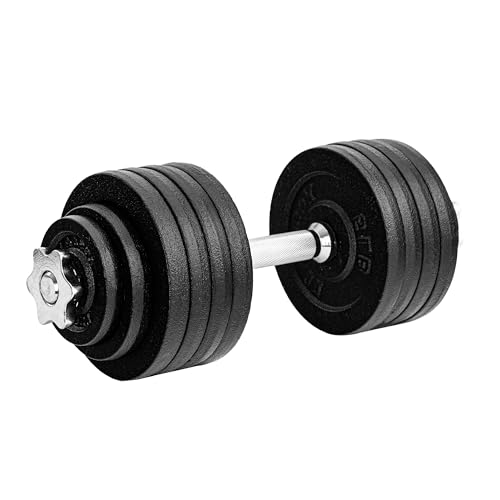
Yes4All Adjustable Dumbbells (Cast Iron Plate Style)
These spinlock-collar dumbbells let you dial in the exact 5-10 lb range most forearm isolation moves actually need, without paying for a premium adjustable system. Loading plates takes longer between sets than a dial-based option.
- Very affordable entry point
- Precise small-increment loading
- Standard barbell-style plates
- Slower to change weight mid-workout
- Collars can loosen over time

CAP Barbell Rubber Hex Dumbbells (Pair)
There's nothing to adjust and nothing to break, just a durable hex head and a comfortable knurled handle at exactly the light weights forearm work calls for. Buying multiple pairs is the only way to progress.
- Rock-solid, simple design
- Hex shape won't roll off a bench
- Comfortable knurl for high-rep sets
- Need multiple pairs for progression
- Takes up more shelf space over time

Amazon Basics Neoprene Dumbbells (Pair)
The neoprene coating is easier on the hands during long wrist-curl sets than bare metal or rubber, according to owner feedback, and the low price makes it easy to grab a full range of light pairs for isolation work.
- Very budget-friendly
- Soft coating is gentle on hands
- Good color-coded weight range
- Coating can wear with heavy daily use
- Not built for heavier carry work
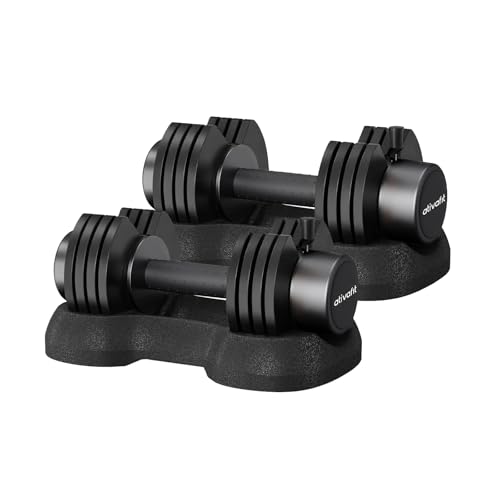
ATIVAFIT Adjustable Dumbbells
A middle ground between fixed hex dumbbells and premium dial systems, the dial adjustment here is a bit stiffer than the Bowflex or NÜOBELL but still saves real time versus swapping plates by hand.
- More affordable than premium adjustables
- Reasonable weight range for home use
- Compact tray storage
- Dial mechanism feels less refined
- Handle grip is thinner than some rivals
How we chose
We assessed each dumbbell option with forearm-specific exercises in mind, not general strength work. That involved comparing handle thickness and knurling specs for high-rep wrist curls, checking recurring owner feedback on grip comfort during extended farmer-carry holds, and looking at how clearly the listing states the ability to drop down to lighter loads, given that forearm isolation training generally requires only a fraction of the weight used for biceps or shoulder exercises. We also considered price alongside the number of individual weight increments a lifter would genuinely need to progress safely.
Why forearm training deserves its own dumbbell routine
Most lifters build forearm strength by accident, as a side effect of rows, curls, and deadlifts. That works to a point, but dedicated forearm work with dumbbells closes gaps that compound lifts miss, particularly wrist flexion, wrist extension, and rotational grip strength. If you’ve ever felt your grip give out before your back or biceps fatigue on a heavy set of rows, that’s a forearm and grip limitation, not a back-strength limitation, and it’s fixable with 10-15 minutes of targeted work two to three times a week.
The core forearm movements to build into your routine
- Wrist curls – Seated, forearms resting on your thighs or a bench, palms up, curl the dumbbell using only your wrist. Targets the flexors on the inside of your forearm.
- Reverse wrist curls – Same setup, palms down. This hits the extensors on top of the forearm, which are commonly weaker and more injury-prone.
- Hammer curls – A neutral-grip curl that recruits the brachioradialis, the thick forearm muscle that gives forearms visible size.
- Farmer’s carries – Simply walking while holding heavy dumbbells at your sides. This builds crushing grip strength and forearm endurance better than almost any isolation move.
- Wrist rotations (pronation/supination) – Holding a dumbbell by one end and rotating your wrist works the rotational stabilizers that isolation curls miss.
- Finger curls – Letting the dumbbell roll down to your fingertips before curling it back into your palm strengthens grip endurance for pull-ups and deadlifts.
What to look for in a dumbbell for forearm training
Weight range and increments
Forearm isolation moves like wrist curls typically require far less weight than curls or presses using the same muscle group indirectly. A lifter who curls 30 lbs dumbbells for biceps might only manage 10-15 lbs for wrist curls. Adjustable dumbbells that drop into small increments, or a rack of light fixed hex dumbbells, matter more here than raw top-end weight.
Handle diameter and texture
A thicker, more textured handle increases grip demand on every rep, which is useful for farmer carries and finger curls but can actually work against you on high-rep wrist curls where a slimmer handle allows better range of motion. Most lifters do best with a standard-diameter knurled handle rather than a fat-grip attachment for dedicated forearm sessions.
Comfort for long carries
For those who include farmer's carries in their routine, it's worth testing how the handle holds up when loaded heavy for 30-40 seconds at a stretch. Hex dumbbells featuring a smooth rubber coating, along with adjustable dumbbells with contoured handles, generally provide more comfort during carries than bare knurled steel.
| Dumbbell type | Best forearm move | Typical weight range | Price |
|---|---|---|---|
| Bowflex SelectTech 552 | Wrist curls, hammer curls | 5-52.5 lbs | $$$ |
| NUOBELL Adjustable | Reverse curls, farmer carries | 5-80 lbs | $$$ |
| PowerBlock Elite | Wrist rotations | 5-50 lbs | $$$ |
| Yes4All Adjustable | Wrist curls, reverse curls | 5-52.5 lbs | $ |
| CAP Barbell Hex Pair | Hammer curls, wrist curls | Fixed, buy per pair | $ |
| Amazon Basics Neoprene | Light isolation, finger curls | Fixed, buy per pair | $ |
A simple weekly forearm routine
Two or three sessions a week is plenty. Try 3 sets of 12-15 reps of wrist curls, 3 sets of 12-15 reps of reverse wrist curls, 3 sets of 10-12 hammer curls, and finish with two 30-40 second farmer’s carries per side. Keep the isolation moves light and controlled, since the forearm muscles are small and recover slowly if you overdo the weight too soon.
Pairing forearm work with the rest of your setup
If you’re building out grip and forearm training alongside a broader home gym, it’s worth browsing our dumbbells hub for a full breakdown of adjustable versus fixed options, and our kettlebells guide if you want to add offset-grip carries and swings into the mix. A sturdy weight bench also makes seated wrist curls far more comfortable than balancing on a chair. For grip work beyond dumbbells, check our resistance training hub for bands that add rotational load.
Related guides
- Best dumbbells for home gyms
- Best kettlebells for grip and carries
- Best weight benches
- Best resistance training gear
- Recovery tools for sore forearms and wrists
- More home gym buying guides
- How we rank fitness equipment
- About TalkGyms
Ready to build grip strength at home?
See today's price on our top pick for forearm workouts.
Frequently asked questions
How often should I train forearms with dumbbells?
Two to three short sessions a week is enough for most lifters. Forearm muscles recover slower than people expect, so daily heavy work can backfire.
Can I use the same dumbbells for forearms and biceps?
Yes, but you’ll typically use much lighter weight for wrist curls and reverse curls than for biceps curls, so an adjustable set or a range of light fixed dumbbells helps.
Do I need special grip dumbbells for forearm training?
No. Standard dumbbells with a comfortable knurled or coated handle work fine. Fat-grip attachments are optional extras, not requirements.
What’s the difference between wrist curls and reverse wrist curls?
Wrist curls (palms up) target the forearm flexors on the inside of your arm, while reverse wrist curls (palms down) target the extensors on top, which are often weaker.
How much weight should I start with for wrist curls?
Most beginners start with 5-10 lb dumbbells for wrist curls, since the small forearm muscles fatigue quickly with light loads.
Are farmer’s carries really a forearm exercise?
Yes, farmer’s carries are one of the most effective grip and forearm endurance builders available, often more effective than isolation curls alone.
Will forearm training help my deadlift grip?
Yes. Stronger wrist flexors, extensors, and grip endurance directly translate to holding heavier deadlifts longer before your grip fails.
More Buying Guides
 Jump Rope Cardio Workout: The Ropes and Routines That Actually Deliver ResultsWhat Does a Mini Barbell Do? A Real-World Breakdown for Home GymsHow to Do the Ski Erg Correctly: Technique, Common Mistakes, and Setup Tips
 The Best Treadmills for a 30-Minute Home Workout in 2026
 Types of Dumbbells: Which Style Actually Fits Your Home Gym in 2026
 Rowing Machine Exercise: What It Does for Your Body and Which Machine to Buy