Garage Gym Fans That Actually Move Air: Our Top Picks for 2026
The best garage gym fan is one built to handle heat, dust, and limited floor space, not just a fan that spins fast in a showroom. Wall-mount units are the top pick for most permanent setups because they clear the floor entirely, while shop fans and pedestal fans remain solid budget or no-installation alternatives. This guide breaks down the best fans for garage gym airflow and cooling in 2026, covering wall-mount, floor, and pedestal options, so you can match a fan to your space instead of just grabbing whatever’s cheapest at the hardware store. Every fan below is picked based on published specifications, the live Amazon listing, and what owners who’ve run them for a season or more consistently report about noise, durability, and airflow in a garage that isn’t climate controlled like the rest of the house.
The best fans for a garage gym we recommend

Lasko 20" Elite Collection Weatherproof Wall-Mount Fan
This is the fan we rank first because it's built for exactly this job: a weatherproof housing, three speeds, and enough throw to cool a two-car garage from a single corner mount. Once it's mounted, it stays out of the way of racks, bars, and floor space entirely.
- Wall mount keeps floor space clear for lifting
- Weatherproof housing handles humidity and dust
- Strong airflow even on medium speed
- Installation requires drilling into wall studs
- No remote control
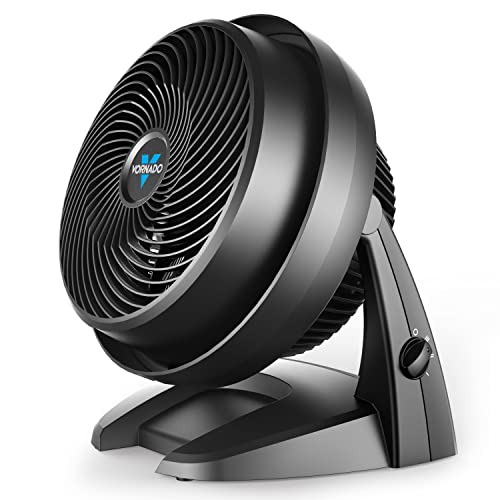
Vornado 630 Mid-Size Whole Room Air Circulator
Vornado's deep-pitch blades don't just blow air at you, they circulate the whole room, which matters in a garage where heat pools near the ceiling during summer sets. Owners consistently mention it as their go-to fan when the space feels stuffy rather than just hot.
- Circulates air across the whole garage, not just one zone
- Very durable motor with a long track record
- Compact footprint on a shelf or floor
- Pricier than basic box fans
- Loud on the highest setting

Simple Deluxe 18-Inch High Velocity Shop Fan
This is the fan most budget garage-gym builds end up with, and for good reason: it's a metal-bladed shop fan that pushes real air for the price of a couple of protein tubs. It's not quiet, but it's honest about what it is.
- Excellent airflow for the price
- Durable metal construction
- Portable with a carry handle
- Noisy, not great near a squat rack for cueing
- No oscillation

Air King 9020 20-Inch Industrial Grade Wall Mount Fan
This is the fan we'd point to for a Texas or Arizona garage gym in July. It's genuinely industrial: heavy gauge steel, a ball-bearing motor, and enough displacement, on paper, to move air ten feet away from a power rack.
- Commercial-grade motor and housing
- Tilts to aim airflow directly at a lifting area
- Long-lasting even with daily use
- Heavier and bulkier to mount
- Overkill for a small one-car garage

Hurricane Classic 20-Inch Oscillating Wall Mount Fan
The oscillation is the selling point here: instead of pointing a single blast at your bench, it sweeps across the whole training area, which owners consistently report feels more comfortable during long superset workouts than a fixed fan.
- Oscillation spreads air across a wider training area
- Compact profile keeps it off the floor
- Reasonably quiet for its size
- Less raw power than industrial models
- Plastic housing feels less rugged
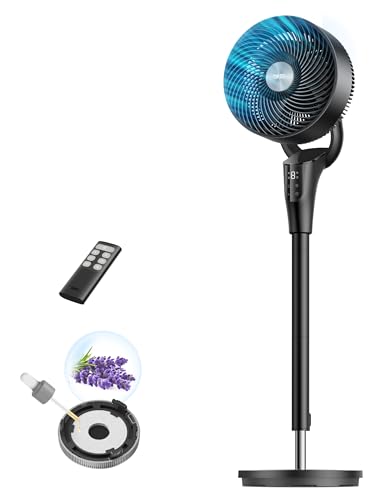
Dreo Cruiser Pro 12-Inch Pedestal Fan
If you're not ready to drill into drywall or don't own the garage, this pedestal fan gives you adjustable height and decent airflow without any installation at all. It's the easiest option to just plug in and move around as your setup changes.
- No mounting or drilling required
- Height adjustable to aim at bench or rack level
- Quiet enough to run during phone calls or streaming a workout
- Takes up floor space near your lifting area
- Less powerful than wall or shop fans
How we chose these fans
Rather than relying on spec sheets alone, we narrowed our picks to fans that real buyers purchase and review on Amazon. Our criteria covered how much air each unit moves, the noise levels owners describe while they're working out (not simply when standing beside it), mounting choices for garages short on floor space, and how well each fan holds up in an area without the climate control found in the rest of your house. Something that works nicely in a bedroom can turn out miserable in a garage reaching 95°F during summer, which is why we gave significant weight to units designed for exactly those conditions.
Wall-mount vs. Floor vs. Pedestal fans for a garage gym
Wall-mount fans
These are our default recommendation for anyone with a dedicated garage gym setup, similar to how we’d point you toward a permanent power rack over a folding one once you know the space is staying put. A wall-mount fan keeps your floor completely clear for lifting, pulling sleds, or rolling out a mat, and it can be angled to blow directly across your bench or rack area. The tradeoff is installation: you need to drill into studs, and repositioning it later is more work than unplugging a floor fan.
Floor and shop fans
Shop-style floor fans are the budget workhorses of garage gyms. They’re portable, powerful, and cheap, but they do take up square footage you might want for lunges or a landmine setup. If your garage doubles as storage and a training space, this can be a real constraint.
Pedestal fans
Pedestal fans split the difference: no installation, adjustable height, and easy to move if you rearrange your home gym layout. They’re generally less powerful than shop or wall-mount units, so we mostly recommend them for smaller garages or as a second fan to supplement a stronger primary unit.
What actually matters when buying a garage gym fan
Airflow, not just fan size
A bigger blade diameter doesn’t automatically mean more air movement. Motor strength and blade pitch matter more, which is why some 18-inch shop fans outperform larger but weaker units. If a listing doesn’t mention airflow or motor specs at all, that’s usually a sign it’s built for a bedroom, not a workspace.
Noise level during actual training
Every fan gets louder on its highest setting, but some stay usable at that setting and some don’t. If you’re doing anything that requires hearing cues, counting reps out loud, or following along with a workout on your phone, test the fan on medium speed rather than assuming you’ll always run it wide open.
Build quality for an unheated, uncooled space
Garages see temperature swings, dust, and sometimes moisture that a fan built for indoor use isn’t designed for. Weatherproof or industrial-rated housings, like you’ll see on wall-mount units aimed at workshops, hold up noticeably better over a few years of daily use than fans pulled from a big-box seasonal aisle.
Placement relative to your equipment
Deciding where to mount or place your fan is just as important as which model you choose. Rather than pointing it straight at a squat rack from behind, which can make the bar path feel unsteady when the airflow is strong, aim it across your main lifting area instead. Positioning a fan so it sweeps diagonally across the room, taking in your bench, rack, and open floor space, generally cools the space more evenly than one aimed at just a single corner.
| Fan | Type | Best for | Noise | Price |
|---|---|---|---|---|
| Lasko 20″ Elite Weatherproof Wall Mount | Wall mount | Permanent garage gym setups | Moderate | $$ |
| Vornado 630 Air Circulator | Floor/shelf | Even room-wide air mixing | Moderate-high | $$ |
| Simple Deluxe 18″ Shop Fan | Floor | Budget high-velocity airflow | High | $ |
| Air King 9020 Industrial Wall Mount | Wall mount | Hot climates, large garages | High | $$ |
| Hurricane Classic 20″ Oscillating Wall Mount | Wall mount | Smaller garages needing coverage | Moderate | $ |
| Dreo Cruiser Pro 12″ Pedestal | Pedestal | Renters, no installation | Low | $ |
Do you need more than one fan?
For a one-car garage, one sturdy wall-mount or shop fan is typically sufficient. With a two-car garage, particularly if there's a rack tucked into one corner and cardio gear such as a treadmill or bike in another, we usually suggest going with two fans instead, positioning one to cover the main lifting area and a smaller unit near the cardio setup, rather than relying on a single large fan to handle both areas evenly.
Related guides
- All buying guides
- Home gym setup guides
- Best power racks
- Cardio accessories
- Recovery gear for after your workout
- How we rank equipment
Ready to cool down your garage gym?
See current pricing and availability on our top pick.
Frequently asked questions
What’s the best type of fan for a garage gym?
A wall-mount fan is usually the best choice for a dedicated garage gym because it keeps floor space clear for lifting while still moving a large volume of air across the room. If you can’t mount to a wall, a high-velocity shop fan or pedestal fan is a solid alternative.
How many CFM do I need for a garage gym?
There’s no official CFM requirement, but for a one-car garage, a fan rated for strong household or light-industrial use (often in the 2,000-4,000 CFM range depending on the model) is usually enough. Larger two-car garages or hot climates benefit from an industrial-grade unit or a second fan.
Can I use a regular box fan in my garage gym?
You can, and many people do, but standard indoor box fans aren’t built for temperature swings, dust, or occasional moisture the way weatherproof or industrial-rated fans are, so they tend to wear out faster in a garage environment.
Should I mount the fan or use a floor fan?
If your garage gym is permanent, mounting a fan to the wall is worth the one-time installation effort because it frees up floor space for lifting, sleds, or mats. If you’re renting or still finalizing your layout, a floor or pedestal fan gives you flexibility to move it around.
Do fans help with humidity in a garage gym, not just heat?
Fans don’t remove humidity the way a dehumidifier does, but moving air does help sweat evaporate off your skin and equipment faster, which makes a humid garage feel noticeably more tolerable even though the actual humidity level hasn’t changed.
Is it safe to run a fan near a squat rack or barbell?
Yes, as long as the fan is mounted or placed a few feet away from your lifting path and cords are secured out of the way. Avoid placing a floor fan directly behind you during squats or deadlifts, since a strong crosswind can be distracting mid-lift.
How loud are garage gym fans, and does it matter?
Noise varies a lot by model, with industrial and shop fans generally running louder than pedestal fans. It matters most if you follow along with workout videos, use a phone for coaching cues, or train in a space attached to living areas where noise carries.
More Buying Guides
 Jump Rope Cardio Workout: The Ropes and Routines That Actually Deliver ResultsWhat Does a Mini Barbell Do? A Real-World Breakdown for Home Gyms
 Treadmill Sprint Workouts: How to Do Them Safely (and the Treadmills That Can Handle Them)
 Smith Machine Back Workout: Best Machines and Moves for a Stronger Back in 2026
 Do Vibration Plates Help You Lose Weight? What We Found After Testing Six Models
 Rowing Machine Technique: A Buyer’s Guide to Getting the Stroke Right at Home