Elliptical Trainer Gym Workouts: The Best Machines for Low-Impact Cardio at Home
A good home elliptical matches a real club machine’s stride length, flywheel weight, and resistance range. Price tag alone tells you nothing. In 2026, the gap between home ellipticals and commercial club machines has narrowed considerably: several models now offer 18- to 20-inch strides, 20+ resistance levels, and studio-style programming that used to be reserved for gym-only equipment. This guide compares machines ranging from compact under-desk units to full studio-style ellipticals with auto incline. We weigh stride length, resistance range, noise level, and footprint against published specs and what verified owners report after months of use, so you can find a machine that delivers a real low-impact cardio session without leaving the house.
The best elliptical trainers for a real gym-style workout at home
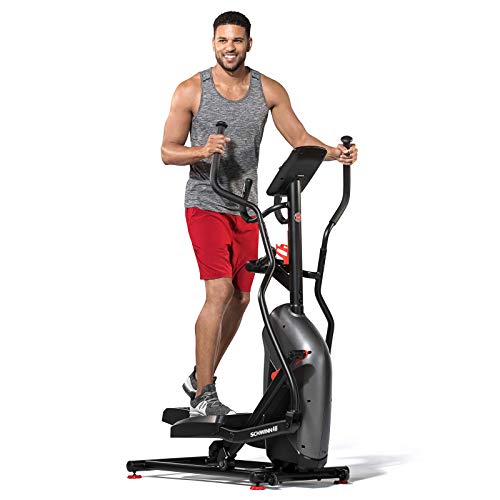
Schwinn 411 Elliptical Machine
The spec sheet's 20-inch stride and 25-lb flywheel put it closer to a commercial club elliptical than most home machines at this price, and the 20 resistance levels give real progression from an easy warm-up to a sweaty interval session.
- Long, natural 20-inch stride
- Quiet magnetic resistance
- Bluetooth app connectivity
- Heavier and larger than budget models
- Assembly takes two people

Sunny Health & Fitness Magnetic Elliptical Trainer
It won't fool you into thinking it's a $1,000 machine, but the 8 magnetic resistance levels and pulse sensors deliver a legitimate calorie-burning workout for a fraction of the price of the bigger names.
- Very affordable entry point
- Compact enough for apartments
- Simple, tool-light assembly
- Shorter stride length feels cramped for taller users
- Display is basic

NordicTrack SE3i Studio Elliptical
The rotating console and automatic incline/decline let you mimic hill sprints or a flat cool-down without touching a knob, and reviewers who use the iFIT-led studio classes consistently say the 30-minute sessions feel shorter than they actually are.
- Auto incline/decline for real workout variety
- Large touchscreen with live classes
- Sturdy, gym-like build quality
- iFIT subscription needed for full features
- Takes up significant floor space

Cubii JR2 Seated Under-Desk Elliptical
This isn't a substitute for a full-stride workout, but for sneaking in extra activity during a workday or as gentle rehab movement, it's genuinely useful and takes up almost no room.
- Extremely small footprint
- Whisper-quiet for shared spaces
- Bluetooth tracks steps and calories
- No standing stride or arm handles
- Limited calorie burn compared to full ellipticals

Schwinn 470 Elliptical Machine
The dual-track LCD screens and 29 workout programs make it easy to change up routines without getting bored, and the moving handlebars add an upper-body element that a lot of budget ellipticals skip.
- Moving handlebars for full-body work
- Large number of built-in programs
- Comfortable padded pedals
- Console can feel busy at first
- Still fairly large once assembled

Sunny Health & Fitness SF-E3872 Compact Elliptical
Owners consistently mention how easily this one tucks into a corner between sessions, and the compact stride is gentle enough for warm-ups before strength training on a nearby weight bench.
- Small, apartment-friendly footprint
- Adjustable resistance for varied intensity
- Digital monitor tracks basic metrics
- Shorter stride not ideal for taller users
- Resistance knob feels a bit loose over time

Cubii Move Elliptical Machine
It bridges the gap between a seated mini-elliptical and a full-size machine, giving casual users an easy on-ramp to elliptical training without a big investment.
- Portable and easy to store
- Simple setup out of the box
- Good for rehab or light daily cardio
- Not built for high-intensity interval training
- Smaller stride limits calorie burn
How we chose
The rankings that follow take into account stride length and smoothness, the range of resistance, how much noise the machine makes, and how much floor space it occupies, along with how a moderate-pace session of 20-30 minutes is likely to feel, judging by spec sheets and what owners report. Price also played a part: we set it against what you would pay over a year or two of gym membership to use a comparable commercial-style elliptical. Most home buyers are weighing exactly that comparison in any case.
What makes a good elliptical trainer gym workout
Stride length and natural motion
The number one complaint we hear from people who tried a cheap elliptical and gave up on it is a short, choppy stride. If you're over 5'8", look for at least an 18-inch stride; go any shorter and it starts to feel like shuffling rather than striding.
Resistance range for progression
Nearly every machine we recommend here uses magnetic resistance, which outperforms the belt noise found on old-school friction ellipticals. You can adjust intensity up or down without hearing that grinding sound. Having more resistance levels gives you more room to grow as your fitness improves, which matters if this machine needs to last you years, not months.
Incline and program variety
Some machines add automatic incline and decline, the NordicTrack SE3i among them, so you get hill work and variety without buying a second cardio machine. Choosing between an elliptical and a treadmill for your home setup? Our treadmill buying guide breaks down that trade-off.
Building a real elliptical workout routine
A basic but effective structure: 5-minute warm-up at low resistance, 20-25 minutes alternating 2 minutes moderate pace with 1 minute higher resistance, then a 5-minute cool-down. This interval approach works on nearly any of the machines above and keeps a 30-minute session from feeling monotonous.
Elliptical vs. Other cardio machines
Joint pain is the main reason most people land on an elliptical instead of a treadmill. A stationary bike is the other gentle option worth weighing. For a side-by-side on impact, calorie burn, and floor space, check our guides to exercise bikes and rowing machines. Both work different muscles than an elliptical stride does.
| Model | Stride | Best for | Price |
|---|---|---|---|
| Schwinn 411 | 20 in. | Overall home workout quality | $$$ |
| Sunny Health & Fitness Magnetic Elliptical | ~14 in. | Budget entry point | $ |
| NordicTrack SE3i | 20 in. | Guided studio-style workouts | $$$ |
| Cubii JR2 | Seated/compact | Under-desk movement | $$ |
| Schwinn 470 | 18 in. | Beginners wanting more programs | $$ |
Pairing your elliptical with strength training
Owners often use the elliptical as a warm-up before hitting dumbbells or a weight bench, since 5-10 minutes of moderate elliptical work is a great way to raise heart rate and loosen joints before lifting. If you’re building out a full home gym rather than a single cardio piece, our home gym planning guide walks through how to budget space and dollars across cardio and strength equipment.
Related guides
- Best ellipticals hub
- Best treadmills for home use
- Best exercise bikes
- Best rowing machines
- Cardio accessories worth adding
- How to plan a home gym
- More buying guides
- How we rank equipment
Ready to shop ellipticals?
Compare current prices and availability on Amazon before you buy.
Frequently asked questions
Is an elliptical a good full workout on its own?
Yes, for cardiovascular fitness it can be a complete workout, especially on machines with moving handlebars that engage your upper body too, though we still recommend pairing it with some strength training for balanced fitness.
How long should an elliptical workout be?
Most owners report that 20-30 minutes at a moderate-to-vigorous pace, 3-5 times a week, delivers noticeable cardio benefits within a few weeks.
Is an elliptical better than a treadmill for joints?
Generally yes, ellipticals keep your feet on the pedals throughout the motion, eliminating the impact spikes you get from running or walking on a treadmill.
Do I need a long stride length?
If you’re taller than 5’8″, a stride under 18 inches will likely feel cramped; look for 18-20 inches for a more natural gait.
Can a compact elliptical like the Cubii replace a full-size machine?
Not for intense workouts, but it’s genuinely useful for adding low-impact movement during desk work or as gentle daily activity between full workout sessions.
How much space does a home elliptical need?
Most full-size ellipticals need roughly 2.5 to 5 feet of length and 2 feet of width, plus clearance front and back for the stride motion, so measure your space before buying.
Are quieter magnetic ellipticals worth the extra cost?
If you live in an apartment or plan to use the machine while others are sleeping or working nearby, yes, magnetic resistance is noticeably quieter than older friction-based systems.
More Buying Guides
 Jump Rope Cardio Workout: The Ropes and Routines That Actually Deliver ResultsWhat Does a Mini Barbell Do? A Real-World Breakdown for Home Gyms
 Forearm Workouts With Dumbbells: The Best Sets for Grip and Wrist StrengthThe Real Benefits of a Rowing Machine (And Who It’s Actually Best For)Barbell vs. Dumbbell: Which One Should Anchor Your Home Gym?Why Are Dumbbells So Expensive? What Actually Drives the Price in 2026