Chest Workout No Equipment: Real Bodyweight Moves (Plus Gear That Makes Them Harder)
Yes, a real chest workout no equipment style is entirely possible in 2026, and it’s one of the most searched chest exercises without equipment options for people restarting training after a break, travel, or a lapsed gym membership. Push-ups, dips off a sturdy chair, and floor presses using nothing but bodyweight can build genuine chest strength for weeks on end. The catch is that bodyweight-only training eventually plateaus, which is why this guide also covers the handful of cheap, no-rack-required gear pieces that owners report keep the progress going once push-ups stop being hard. Below you’ll find both the full workout and the gear worth adding once you outgrow it.
Gear that upgrades a no-equipment chest workout once bodyweight gets easy

Fit Simplify Resistance Bands Set
Looping a light band across the back during standard push-ups is a common way owners add extra tension to the last few reps of every set, and the set comes with five bands so you can keep progressing for months.
- Five resistance levels in one pack
- Doubles for chest press and fly patterns
- Packs flat in a gym bag or drawer
- Door anchor sold separately on some sets
- Bands eventually stretch out with heavy use

TRX Home2 System
Anchored over a door, the TRX lets you angle your body to dial chest difficulty up or down mid-set, something a flat floor push-up simply can't do. Owners consistently describe it as the closest thing to a cable machine you'll get with zero weights.
- Adjustable difficulty via foot/body angle
- Includes door anchor and workout app access
- Straps are genuinely durable
- Higher price than basic bands
- Needs a sturdy door or anchor point

WHATAFIT Resistance Bands with Handles
The handles make it easy to mimic a cable chest fly from a living room floor, and the anchor strap supports both standing presses and floor presses in the same session.
- Comfortable foam handles
- Comes with door anchor and ankle straps
- Very affordable for the accessory count
- Handle stitching is basic, not gym-grade
- Heaviest band still lighter than TRX resistance

CAP Barbell Push-Up Bars
The spec sheet and owner reviews confirm these drop your chest noticeably lower than the floor allows, which owners report adds a deeper stretch and more soreness than flat push-ups. Simple, sturdy, and cheap.
- Extends push-up range of motion
- Non-slip rubber grips and base
- Very inexpensive entry point
- No resistance added, just range of motion
- Can feel unstable on carpet

Bowflex SelectTech 552 Adjustable Dumbbells
Once someone can bang out 30+ clean push-ups, these are a natural next step for flat presses on the floor, giving real progressive overload again within a couple of workouts, according to owner reports.
- 5 to 52.5 lbs in one compact dumbbell
- Dial adjustment is fast between sets
- No need for a full rack
- Bulkier footprint than a single fixed dumbbell
- Pricier than the other options here
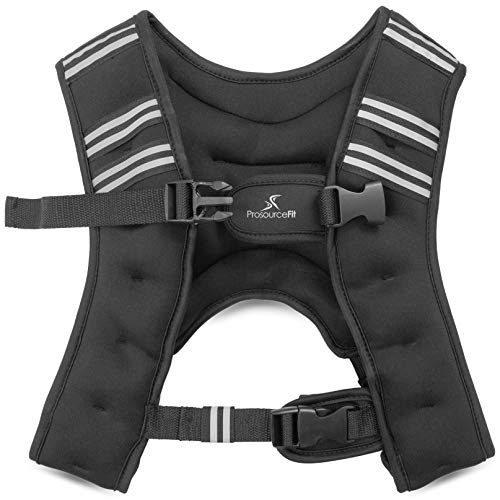
ProsourceFit Weighted Vest
Strapping this on for push-up sets turns an easy bodyweight exercise back into a genuine strength challenge, and it stacks cleanly with the other gear on this list.
- Adds up to 20 lbs of resistance
- Adjustable weight increments included
- Useful beyond chest work too
- Can shift slightly during fast reps
- Bulkier under a shirt than bands
How we chose
We built this list around published specs, the live Amazon listings, and patterns in verified owner reviews for each product. We cross-checked how bands, suspension trainers, weighted vests, and adjustable dumbbells are described for chest work, along with what long-term owners report about durability and real progression potential. See our full ranking process for details on how we score gear for comfort, durability, and value.
The actual no-equipment chest workout
Before any gear talk, here’s a bodyweight-only session that genuinely works the chest, done as 3-4 rounds with 60-90 seconds rest:
Warm-up (5 minutes)
Arm circles, shoulder rolls, and 10 slow push-ups to half depth to prime the shoulder joint before loading it.
Main circuit
- Standard push-ups – 10-20 reps, hands just outside shoulder width
- Wide-grip push-ups – 8-15 reps, hands wider than shoulders to bias the outer chest
- Decline push-ups (feet on a couch or step) – 8-12 reps, targets the upper chest
- Chair or counter dips – 8-15 reps, leaning forward to keep tension on the chest, not just triceps
- Push-up hold – 20-30 seconds at the bottom position for time-under-tension
Finisher
A 60-second AMRAP (as many reps as possible) of standard push-ups to failure, done once at the very end of the session.
Why bodyweight-only chest training stalls
Push-ups belong to the closed-chain movement category, which means the resistance comes from your own bodyweight and remains constant. Once you're able to perform 25-30+ clean reps, additional reps mainly develop muscular endurance instead of contributing to further strength or size gains. This is precisely where the equipment covered in our list demonstrates its value: resistance bands and a weighted vest let you add load in five-pound increments, rather than jumping straight to a full dumbbell set.
Bands vs. a suspension trainer vs. Actual weight
Resistance bands are the cheapest entry point and pack into a drawer, which matters if you’re renting or short on space – pair them with our resistance training guide for band-only programming ideas. A suspension trainer like the TRX gives you more angle control and a closer feel to cable machine chest work, but it needs a solid door frame or anchor point. Adjustable dumbbells and a weighted vest are the most direct upgrade path once you’re ready for true progressive overload, and at that point it may be worth looking at a proper weight bench so you can do flat, incline, and decline presses instead of just floor presses.
| Option | Best for | Space needed | Approx. Price |
|---|---|---|---|
| Resistance bands | Beginners adding light resistance | Minimal, packs in a bag | $ |
| Push-up bars | Deeper range of motion | Small, floor-only | $ |
| Suspension trainer | Angle-adjustable chest press/fly | Door anchor point | $$$ |
| Weighted vest | Loading push-ups/dips | None, wearable | $$ |
| Adjustable dumbbells | True progressive overload | Small storage footprint | $$$ |
Common mistakes to avoid
Flaring the elbows out to 90 degrees on push-ups stresses the shoulder joint more than the chest – keeping elbows around a 45-degree angle from the torso is the form most coaches and physical therapists recommend. Chair dips done too upright also turn into a triceps-only movement; leaning the torso forward noticeably shifts the tension back into the chest. If shoulders are a limiting factor, a resistance band looped overhead for banded pull-aparts as a superset is worth adding, which crosses over into our broader recovery gear recommendations for joint prep.
When it’s time to add a bench or dumbbells
If you’re consistently doing 3+ sets of 25+ push-ups with a band already added, that’s a strong signal you’ve outgrown pure bodyweight work. At that point, a compact adjustable dumbbell set paired with a folding bench from our weight bench picks opens up flat and incline presses, which is a more complete chest-building path than push-up variations alone. For anyone thinking about building this into a full setup, our home gym guide covers how to sequence these purchases without overspending upfront.
Related guides
- All buying guides
- Resistance training gear
- Dumbbells
- Weight benches
- Home gym setups
- Recovery tools
- How we rank gear
- About TalkGyms
Ready to add resistance to your chest workout?
Start with a set of resistance bands or a suspension trainer before jumping to dumbbells.
Frequently asked questions
Can you really build a bigger chest with no equipment?
Yes, up to a point. Push-up variations, dips, and holds can build noticeable chest strength and size for beginners and intermediates, but progress slows once you can do 25-30+ clean push-ups per set, which is when adding bands, a vest, or dumbbells helps.
How often should I do a no-equipment chest workout?
Two to three times per week with at least one rest day between sessions works well for most people, since push-ups also tax the shoulders and triceps and need recovery time.
What’s the best push-up variation for the upper chest?
Decline push-ups, with your feet elevated on a couch, step, or sturdy chair, shift more of the load to the upper chest fibers compared to standard flat push-ups.
Do resistance bands actually add meaningful resistance to push-ups?
Yes. Looping a band across your upper back and anchoring it under your hands adds resistance that increases as you push up, which mimics the strength curve of a bench press more closely than plain bodyweight.
Is a suspension trainer worth it just for chest training?
It’s most worth it if you also want shoulder, back, and core exercises from the same tool, since it’s a pricier option if used only for chest work. For chest-only budgets, bands are more cost-effective.
How many push-ups should a beginner be able to do?
Most beginners start somewhere between 5 and 15 strict push-ups. Building to 20-25 clean reps is a reasonable short-term goal before adding external resistance.
Can chair dips replace bench dips safely?
Yes, as long as the chair or surface is stable and won’t slide. Keep your torso leaned forward rather than upright to keep tension on the chest and reduce shoulder strain.
What should I do once bodyweight chest exercises get too easy?
Add resistance progressively: start with light bands, move to a weighted vest for loaded push-ups and dips, then consider adjustable dumbbells and a bench for true flat and incline pressing.
More Buying Guides
 Jump Rope Cardio Workout: The Ropes and Routines That Actually Deliver ResultsWhat Does a Mini Barbell Do? A Real-World Breakdown for Home GymsBarbell vs. Dumbbell: Which One Should Anchor Your Home Gym?
 Why Are Dumbbells So Expensive? What Actually Drives the Price in 2026
 The Best Barbell Tricep Workout Setup for Home Gyms in 2026How to Use Dumbbells: A Beginner’s Guide to Form, Weight, and Progression