Building a Calisthenics Home Gym: The Equipment That Actually Earns Its Keep
The right calisthenics equipment for home training comes down to seven categories: a pull-up bar, a power tower, rings, parallettes, bands, a suspension trainer, and a weighted vest. You can build a complete setup for less than the cost of a single power rack. Calisthenics gear is having a real moment in 2026. That’s not just a fitness trend headline, it’s a practical answer for anyone who wants serious strength work without a rack full of iron. A doorway bar, a set of rings, or a pair of parallettes can turn a spare bedroom corner into a legitimate training space. This kit scales from absolute beginner to advanced ring and bar athlete without ever needing a plate-loaded machine. Below, each category is broken down based on published specs, the live Amazon listings, and what verified owners consistently report.
The calisthenics equipment we'd actually buy again

Amazon Basics Doorway Pull-Up Bar
No hardware, no drilling, and it lives under a bed or in a closet between sessions. Owners consistently report it holds up well for strict pull-ups, chin-ups, and hanging leg raises without the door frame creaking.
- Setup takes under two minutes
- Doorway trim padding protects paint
- Cheap enough to not think twice about
- Not rated for muscle-ups or kipping
- Some door frames are too narrow or wide

Sunny Health & Fitness Power Tower
This freestanding station offers a stable dip station and a taller pull-up bar than any doorway option, and the padded arm rests make vertical leg raises much more comfortable than a bare bar, according to owner reviews.
- Combines pull-up, dip, and push-up stations
- Sturdy A-frame base doesn't wobble mid-set
- No wall or ceiling mounting needed
- Takes up real floor space
- Some assembly and periodic bolt checks required

Yes4All Gymnastic Rings
The adjustable straps let you set ring height in seconds for anything from feet-elevated rows to full dips, and owners note the wood rings stay dry and grippy through sweaty sessions.
- Buckle straps adjust length fast
- Wood construction resists slipping better than plastic
- Portable enough to loop over a park bar or beam
- Need a secure anchor point (bar, beam, or rack)
- Ring work has a learning curve for beginners
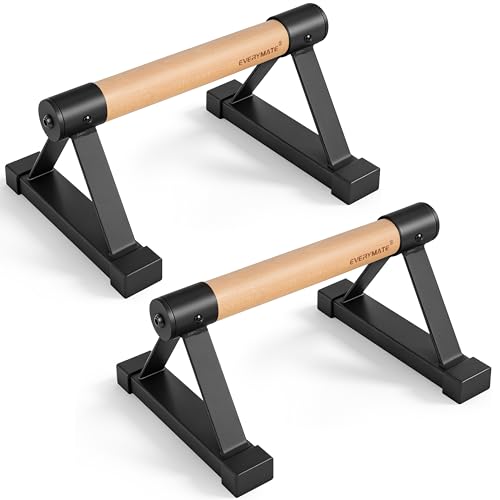
ProsourceFit Parallettes
Low to the ground and easy to store flat, these provide the wrist relief and clearance needed for push-up variations and L-sit holds that feel awkward on the floor.
- Non-slip rubber feet grip hardwood and gym flooring
- Low profile keeps center of gravity manageable
- Stackable for storage
- Fixed height won't suit taller lifters for all moves
- Not rated for full planche or advanced ring-style loading

WHATAFIT Resistance Bands Set
The heavier bands loop around a pull-up bar for assisted reps, while the lighter ones work for banded push-ups, giving a surprising amount of variety out of one small bag.
- Five resistance levels cover assistance to added load
- Packs down small enough for a suitcase
- Door anchor and handles included
- Bands degrade with heavy long-term use
- Assisted pull-up setup takes a little practice

Undersun Suspension Trainer
The webbing straps are rated more durable than budget trainers at this price point, and the adjustable foot cradles make single-leg work a lot more versatile than a plain strap.
- Heavy-duty webbing and stitching
- Works from a door, tree branch, or power rack
- Adjustable for dozens of exercise variations
- Needs a rated anchor point to be safe
- Pricier than basic resistance band kits

CAP Barbell Weighted Vest
Once bodyweight pull-ups stop feeling like work, strapping this on for weighted sets is one of the cheapest ways to keep progressing without buying a full rack setup.
- Removable weight blocks let you dial in load
- Snug fit doesn't bounce during dynamic moves
- Doubles for weighted walks and rucking
- Bulkier vests can restrict shoulder mobility
- Heavier loaded versions get pricey
How we chose
Equipment was prioritized for being genuinely popular and well-reviewed on Amazon rather than niche imports, drawing on the same category research behind related guides on resistance training gear and home gym setups. For each item, listed weight capacities and construction specs were compared against how owners describe real bodyweight use (not just static hangs), how easy it was to install or store, and whether the price matched what you actually get. Anything owners consistently flagged as flimsy for hangs, dips, or rows was skipped. Preference went to gear that works in small apartments as readily as in a garage gym.
What actually counts as calisthenics equipment
Bars: doorway, wall-mounted, and freestanding
In this category, nothing offers better value than a pull-up bar. Doorway bars come in at the lowest price and need no setup at all, though they're restricted to strict pull-ups and chin-ups, since kipping or swinging on one isn't advisable. Wall-mounted bars and freestanding power towers demand a bigger budget and either more commitment or more floor space, but in return you get the ability to do dips, hanging leg raises, and eventually work toward muscle-up transitions without having to worry about a door frame.
Rings and parallettes: the progression tools
Gymnastic rings and parallettes are where calisthenics starts to look less like a home workout and more like actual gymnastics training. Rings add an instability component that builds shoulder stability fast. Parallettes get your hands off the floor for cleaner push-up mechanics, L-sits, and eventually planche work. Both are inexpensive relative to almost anything else on a fitness equipment list.
Bands, suspension trainers, and vests: scaling the difficulty
Resistance bands make pull-ups accessible before you can do one unassisted, and they add resistance to dips, rows, and presses when you don’t have a rack. Suspension trainers turn a door or bar into a full sling-based gym for rows, pistol squat assistance, and core work. Weighted vests solve the opposite problem. Once bodyweight reps get easy, a vest is the cheapest way to keep adding load without buying a full power rack or barbell setup.
Buying considerations before you check out
Anchor points and doorway compatibility
Before purchasing a doorway bar, check the width of your door frame and make sure there's enough clearance around the trim. Rings and suspension trainers require a rated anchor point, whether that's a bar, a beam, or a rack, so make sure one is available before placing your order.
Space and storage
Power towers are the least apartment-friendly option here; everything else: bands, rings, parallettes, a doorway bar, can be packed into a closet or duffel bag. If floor space is tight, prioritize gear that stores flat or rolls up.
Load ratings and durability
Check listed weight capacities against your bodyweight plus any added vest load, and read recent reviews for reports of bar bending, band snapping, or strap fraying rather than just star averages.
| Equipment | Best for | Space needed | Typical price |
|---|---|---|---|
| Doorway pull-up bar | Pull-ups, chin-ups | Minimal | $ |
| Power tower | Dips, leg raises, pull-ups | Moderate footprint | $$ |
| Gymnastic rings | Ring rows, dips, support holds | Needs anchor point | $ |
| Parallettes | L-sits, planche progressions | Minimal, stores flat | $ |
| Resistance bands | Assistance and added load | Packs into a bag | $ |
| Suspension trainer | Rows, core, single-leg work | Needs anchor point | $$ |
| Weighted vest | Progressive overload | Minimal | $$ |
Related guides
- More buying guides
- Resistance training equipment
- Home gym build guides
- Weight benches
- Kettlebells
- Recovery gear
- How we rank
- About TalkGyms
Ready to build your calisthenics setup?
Compare current prices on the gear from our list.
Frequently asked questions
Do I need a full power tower to start calisthenics?
No. A doorway pull-up bar plus resistance bands covers most beginner programming; a power tower or rack is only necessary once you want dedicated dip stations or heavier hanging work.
Are gymnastic rings safe for beginners?
Yes, as long as they’re anchored to a rated bar or beam and adjusted low enough that support holds and rows feel controlled before progressing to dips.
How much weight capacity do I need on a doorway bar?
Check that the listed capacity comfortably exceeds your bodyweight, and inspect your door frame width and trim material before installing, since narrow or hollow frames can be a limiting factor regardless of the bar’s rating.
Can resistance bands replace a full pull-up progression program?
They’re excellent for assistance and added resistance, but most lifters eventually outgrow band assistance and need to train unassisted reps directly to keep progressing.
Is a suspension trainer as effective as gymnastic rings?
They overlap for rows and core work, but rings allow dips and more advanced static holds that most suspension trainers aren’t designed for.
What’s the best calisthenics setup for a small apartment?
A doorway pull-up bar, a set of parallettes, and a resistance band kit cover most of the popular exercises without needing permanent floor space.
When should I add a weighted vest to my training?
Once strict bodyweight pull-ups, dips, or push-ups feel easy for 12-plus reps, adding vest weight is a cheaper progression option than moving to barbell training.
More Buying Guides
 Jump Rope Cardio Workout: The Ropes and Routines That Actually Deliver ResultsWhat Does a Mini Barbell Do? A Real-World Breakdown for Home Gyms
 Rowing Machine Exercise: What It Does for Your Body and Which Machine to Buy
 Barbell Workouts You Can Actually Do at Home (And the Gear That Makes Them Work)
 How to Do the Dumbbell Good Morning (Form Guide + Best Dumbbells for It)
 Bench Ab Workout: Best Benches for Building Real Core Strength at Home