Bike Stands for Exercise: Turning Your Regular Bike Into a Home Trainer
A bike stand for exercise clamps your bike’s rear wheel or frame into a resistance unit so you can pedal in place indoors, turning any road bike, hybrid, or mountain bike into a home trainer without buying a separate stationary bike. Also known as a bicycle exercise stand or indoor bike trainer stand, it’s one of the cheapest ways into home cardio if you already own a bike you like riding. In 2026, this remains a popular budget-friendly path for cyclists who don’t want to duplicate their bike fit on a separate machine. Below, we compare the top-rated stationary bike stands on Amazon, looking at clamp compatibility, resistance feel, noise level, and what the spec sheets and owner reports say about stability during hard efforts.
The best bike stands for exercise we recommend
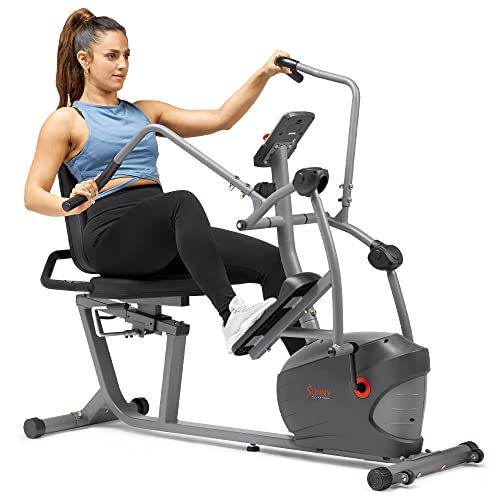
Sunny Health & Fitness Bike Trainer Stand
The clamp mechanism is built for quick setup with most road bikes, and the magnetic resistance dial delivers a clearly different feel from low to high settings. Owners consistently report that the folding legs stay sturdy enough to prevent rocking during out-of-saddle efforts.
- Quick tool-free setup
- Solid magnetic resistance range
- Folds flat for storage
- Some drivetrain noise at high resistance
- Front wheel riser sold separately

YOSUDA Indoor Bike Trainer Stand
This is a solid pick for riders who just want to keep pedaling through winter without spending big. It uses basic fluid-free resistance, and the listing specifies a clamp that fits a variety of frame sizes without adapters.
- Very affordable
- Wide frame compatibility
- Compact folded footprint
- Resistance feels flat at higher effort
- Plastic clamp knob feels cheap

Sunny Health & Fitness Magnetic Bike Trainer
The simple resistance dial makes this an easy stand to hand off to a beginner who's never done indoor training before. It's not silent, but owners consistently report predictable, stable performance ride after ride.
- Simple 5-level resistance dial
- Stable base, no wobble
- Straightforward instructions
- Bulkier to store than folding models
- Resistance jumps are noticeable between levels
MERACH Bike Trainer Stand
This stand is built for storage between rides, with legs that fold flush and a unit light enough to carry with one hand. Some owners note a bit more flex under hard sprints.
- Lightest stand on this list
- Folds very compact
- Reasonable price
- Some frame flex during hard efforts
- Fewer resistance levels than pricier models
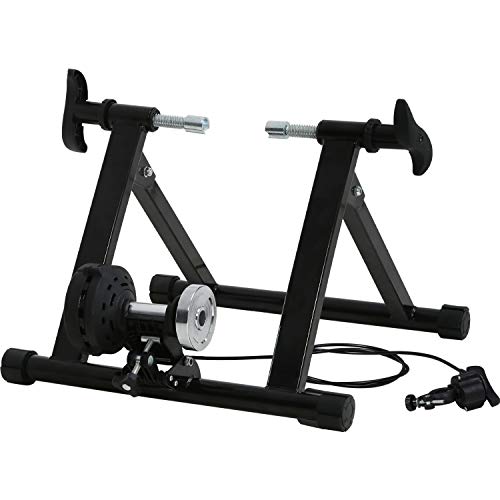
pooboo Bike Trainer Stand
Owners consistently report this stand runs quieter than several competitors, which matters if you're riding before the household wakes up. The clamp mechanism is also frequently cited as the most secure among budget options.
- Quieter than most in this price range
- Secure rear clamp
- Good value for the resistance range
- Riser block not included
- Assembly instructions could be clearer
Schwinn Bike Trainer Stand
The resistance curve on this stand is designed to ramp up smoothly rather than in sudden steps, and owners consistently mention this progressive feel makes interval work more enjoyable.
- Smooth, progressive resistance curve
- Sturdy build quality
- Trusted brand name
- Pricier than generic alternatives
- Heavier to move around
How we chose
We focused on stands that are widely available on Amazon rather than niche imports, and we prioritized the usability factors owners care about most: how easily the clamp fits different frame and wheel sizes per the spec sheet, how stable the stand’s footprint is reported to feel during standing efforts, how much noise the resistance unit generates according to owner reviews, and whether the folding mechanism’s listed dimensions actually make storage easier or just look that way on paper. We compared published resistance specs and what verified owners consistently report across easy spins and harder interval efforts to gauge how the resistance holds up under load.
What is a bike stand for exercise, exactly?
There are two general categories worth knowing before you buy:
Wheel-on trainer stands
These are the most common and most affordable. You keep your rear wheel mounted on the bike, and the stand clamps the rear axle (or in some cases just holds the wheel against a resistance roller). Setup is fast, but there’s some tire wear over time and slightly more drivetrain noise.
Direct-drive stands
You remove your rear wheel entirely and attach the chain directly to the trainer’s own cassette. These tend to be quieter and more stable, but they cost more and take a bit longer to swap on and off.
Every product in our list above is a wheel-on style, which is what most home users buying a “bike stand for exercise” are actually looking for: it’s the simplest, most budget-friendly entry point.
What to look for before you buy
Frame and wheel compatibility
Check the clamp’s stated wheel size range and frame compatibility (quick-release vs. Thru-axle) before ordering. Most stands on the market fit standard 26–29 inch wheels with quick-release skewers, but thru-axle mountain bikes may need an adapter that isn’t always included.
Resistance type
Magnetic resistance, which you adjust with a dial or lever, lets you fine-tune how hard you're working, and this matters more if interval training is on your agenda rather than steady, consistent spinning. Fluid resistance trainers offer a smoother feel but come at higher price points, making them less common among budget bike-stand options.
Stability under load
If you're planning on standing up to sprint or climbing out of the saddle, a wider stance and heavier base are what you should look for. Compact, lighter stands are ideal for storage purposes, but they can feel less stable when you're pushing hard.
Noise level
If you’re riding early morning or in an apartment, noise matters more than the spec sheet suggests. Owners consistently report that the quietest stands use enclosed magnetic resistance units rather than exposed roller-style designs.
Storage and portability
Folding legs and a compact folded footprint make a real difference if you’re tucking the stand behind a couch or in a closet between sessions.
Bike stand vs. Buying a stationary bike
If you don’t already own a bike you like riding, or you want a more app-connected, all-in-one experience, it’s worth comparing a trainer stand against a dedicated exercise bike. A stand is cheaper and preserves your exact bike fit, but a standalone bike is often quieter, more stable, and easier for multiple household members to share.
| Model | Best for | Resistance type | Price |
|---|---|---|---|
| Sunny Health & Fitness Bike Trainer Stand | Overall use | Magnetic | $$ |
| YOSUDA Indoor Bike Trainer Stand | Budget buyers | Basic magnetic | $ |
| Sunny Health & Fitness Magnetic Bike Trainer | Beginners | Magnetic dial | $$ |
| MERACH Bike Trainer Stand | Small spaces | Magnetic | $ |
| pooboo Bike Trainer Stand | Quiet operation | Magnetic | $ |
| Schwinn Bike Trainer Stand | Smoother resistance feel | Progressive magnetic | $$ |
Related guides
- Best exercise bikes
- Cardio accessories
- Home gym essentials
- More buying guides
- Recovery tools
- How we rank gear
- About TalkGyms
Ready to turn your bike into a home trainer?
See current prices and availability on the top-rated bike trainer stands.
Frequently asked questions
Will any bike fit on a trainer stand?
Most wheel-on stands fit standard 26 to 29 inch wheels with quick-release rear axles. Thru-axle mountain bikes and fat bikes often need a separate adapter, so check compatibility before buying.
Do trainer stands damage my rear tire?
Wheel-on stands can wear down a regular tire faster than road riding does, since the roller creates friction and heat. Many riders switch to a dedicated trainer tire if they use the stand often.
How loud are bike trainer stands?
Noise varies by model and mostly comes from the resistance unit and drivetrain, not the stand itself. Enclosed magnetic units tend to run quieter than older roller-style designs.
Can I do interval training on a basic magnetic trainer stand?
Yes, as long as the stand has multiple resistance levels you can adjust on the fly. Look for at least 5 to 8 resistance settings if structured intervals are a priority.
Is a direct-drive trainer better than a wheel-on stand?
Direct-drive trainers are generally quieter and more stable since they remove tire slip from the equation, but they cost more and require removing your rear wheel each session.
Do I need a front wheel riser block?
Most wheel-on stands only lift the rear wheel, so a small riser block under the front wheel keeps the bike level. Some stands include one; many require it as a separate purchase.
Can beginners use a bike trainer stand without any cycling experience?
Yes. Setup is straightforward on most models, and starting on a low resistance setting is a comfortable way to build up indoor riding time before increasing difficulty.
More Buying Guides
 Jump Rope Cardio Workout: The Ropes and Routines That Actually Deliver ResultsWhat Does a Mini Barbell Do? A Real-World Breakdown for Home Gyms
 Rowing Machine Technique: A Buyer’s Guide to Getting the Stroke Right at Home
 Pilates Workout Equipment: The Gear Worth Buying for a Home StudioHow to Build a Garage Gym Setup That Actually Works in 2026
 Barbell Bicep Curl: How to Do It Right and the Best Bars for It