The Home Bench Press Workout: Gear You Need and How to Build It
A good bench press workout at home comes down to three controllable factors: a stable bench, a way to load real resistance, and a rep scheme that progresses week to week. In 2026, most home lifters land on this question once they strip away gym-only equipment like a fixed Smith machine or a spotter on call. This guide breaks down the bench, barbell-and-plate combo, and dumbbell options worth building a workout around, based on published specs, the live Amazon listing, and what verified owners consistently report. From there it covers how to structure the warm-up, working sets, and accessory work around whichever setup you choose.
The bench press equipment we'd actually buy for a home workout

FLYBIRD Adjustable Weight Bench
Owners consistently report that the incline pins lock in solidly and the pad stays put through months of flat and incline pressing without sliding on the frame. It folds flat, which matters if you're pressing in a garage that doubles as storage.
- Multiple incline/decline positions
- Folds for storage
- Stable under heavy dumbbell presses
- Not rated for full powerlifting-style barbell max loads
- Vinyl pad shows wear over time

CAP Barbell Olympic Bench with Squat Rack
This setup lets lifters add real weight to the bar safely at home, thanks to uprights and spotter arms instead of hoping to rack a heavy set solo.
- Built-in spotter arms
- Stable Olympic-width design
- Good value for a rack + bench combo
- Takes up real floor space
- Assembly is a two-person job

Signature Fitness Olympic Bar and Weight Plate Set
The knurling gives a real grip under a working set, and buying bar and plates together avoids mismatched sleeve sizes, a common headache with piecemeal setups.
- Bar and plates ship together
- Solid knurl pattern for grip
- Good weight range for progressive overload
- Bar whip is noticeable above heavy loads
- Plates are bumper-style, bulkier to store

Finer Form Multi-Functional Weight Bench
The spec sheet puts it narrower than most flat benches, which helps when squeezing it beside a rack, and owners report it doesn't feel tippy during dumbbell presses.
- Small footprint
- Sturdy for its size
- Reasonably priced
- Limited incline range
- Weight capacity lower than full-size benches

Yes4All Rubber Coated Hex Dumbbells
Owners consistently report starting a dumbbell press progression with these and never having a pair roll away mid-set, which sounds minor until it happens to you on a flat bench.
- Hex shape prevents rolling
- Rubber coating protects floors
- Sold in useful weight increments
- Buying a full range gets pricey
- Rubber smell takes a day or two to fade
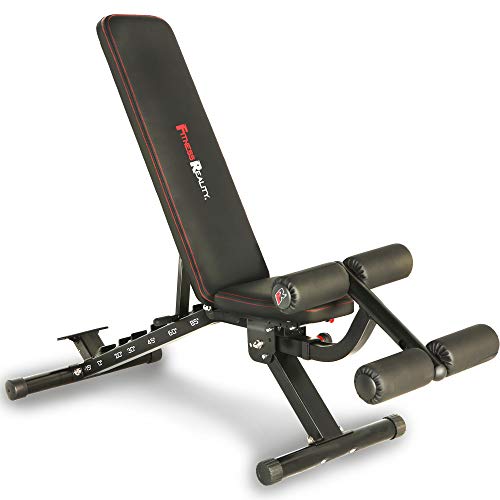
Fitness Reality 1000 Super Max Weight Bench
Owners report a full year of flat and incline pressing before outgrowing the weight rating, which is a fair trade for the price.
- Low price of entry
- Decent incline adjustability
- Compact enough for small spaces
- Lower max weight capacity
- Pad firmness isn't for everyone
How we chose
Our focus was on benches and loading equipment able to withstand repeated pressing, rather than gear suited only to sitting or light accessory work. To judge this, we reviewed pad stability specs, looked at what owner reviews said about how securely the incline pin holds, compared weight capacity with the press numbers people realistically reach at home, and considered how well each piece suits a small home gym footprint. We also considered whether a beginner could put together a full bench press workout using only the item, or would still need a rack or spotter.
What a bench press workout actually needs
At minimum, a bench press workout needs a stable bench and a way to load resistance, either a barbell with plates or a pair of adjustable dumbbells. Racks, spotter arms, and incline options push your numbers higher or your risk lower. None of them are strict requirements.
The bench
A flat bench alone will let you run a solid bench press workout for months. Adding incline positions extends the same workout to upper-chest work without buying a second bench, which is why most of our top picks are adjustable.
The load
With barbell pressing you can add weight in smaller jumps and load up more overall, which is useful when you're aiming for progress over the long haul. For beginners, dumbbell pressing tends to be easier on the shoulders and means you don't need a rack at all. This is why it's often the go-to suggestion when someone new to training asks what a good bench press workout actually looks like.
What a good bench press workout actually looks like
For most lifters asking what a great bench press workout looks like in practice, the structure is less complicated than it seems:
- Warm-up: 2-3 light sets working up to your working weight.
- Main sets: 3-5 sets of 4-8 reps at a weight that’s genuinely challenging by the last two reps.
- Accessory work: incline dumbbell press, triceps work, or rear-delt rows to balance the pressing.
What separates a good bench press workout from a stalled one is usually progression—adding small load or rep increases week over week—rather than any specific set-and-rep formula.
Barbell vs. Dumbbell bench press workouts
| Factor | Barbell setup | Dumbbell setup |
|---|---|---|
| Space needed | Bench + rack, larger footprint | Bench + dumbbell rack, smaller footprint |
| Load ceiling | Higher, easier to add small increments | Lower without a large dumbbell set |
| Safety solo | Needs spotter arms or safety pins | Easier to bail out of a failed rep |
| Cost to start | Higher (bar + plates + rack) | Lower for a basic pair, higher for a full range |
Common mistakes that stall a bench press workout
The most common issue owners mention is a bench that wobbles or feels too narrow, which caps how much weight can be loaded safely. Failing to apply progressive overload ranks second, with the same weight used month after month and no plan in place to increase it. Third is neglecting the incline setting even when the bench offers one, leaving the upper chest untrained.
Related guides
- Best weight benches
- Best barbells and plates
- Best dumbbells
- Best power racks
- Home gym buying guides
- Resistance training gear
- How we rank fitness equipment
- More buying guides
Ready to build your bench press setup?
See our top-rated adjustable weight bench picks for 2026.
Frequently asked questions
What does a bench press workout consist of?
A typical bench press workout includes a warm-up, 3-5 working sets of 4-8 reps on flat or incline bench press, and accessory work like triceps or rear-delt exercises.
What is a good bench press workout for beginners?
A good beginner bench press workout uses light-to-moderate dumbbells or an empty barbell for 3 sets of 8-10 reps, focusing on control before adding heavier load.
What is the best bench press workout for building strength?
The best strength-focused bench press workout uses heavier loads for 3-5 sets of 3-6 reps with full warm-up sets and 2-3 minutes rest between working sets.
Do I need a power rack for a bench press workout at home?
Not necessarily. A stable adjustable bench with dumbbells lets you run a complete bench press workout without a rack; a rack becomes useful once you’re loading a barbell heavier than you can safely bail from.
How often should I do a bench press workout each week?
Two to three bench press sessions per week, spaced with at least one rest day between, works well for most lifters to build strength without overtraining the shoulders.
Can dumbbells replace a barbell for a bench press workout?
Yes, dumbbell pressing builds comparable chest and triceps strength for most home lifters and is often safer to train alone without a spotter.
What’s the difference between a great bench press workout and just going through the motions?
A great bench press workout includes deliberate progression in weight or reps over time, proper warm-up sets, and enough recovery between sessions, rather than repeating the same load indefinitely.
More Buying Guides
 Jump Rope Cardio Workout: The Ropes and Routines That Actually Deliver ResultsWhat Does a Mini Barbell Do? A Real-World Breakdown for Home GymsBarbell vs. Dumbbell: Which One Should Anchor Your Home Gym?
 Why Are Dumbbells So Expensive? What Actually Drives the Price in 2026
 The Best Barbell Tricep Workout Setup for Home Gyms in 2026How to Use Dumbbells: A Beginner’s Guide to Form, Weight, and Progression