Bench Ab Workout: Best Benches for Building Real Core Strength at Home
The best bench for a bench ab workout is an adjustable weight bench with a genuine decline setting and a padded leg anchor. That combination lets you load weighted crunches, decline sit-ups, and reverse crunches the way a dedicated ab machine would. A bench ab workout is one of the most underrated ways to build real core strength at home in 2026, no dedicated ab machine required. Any solid adjustable bench, whether it’s a flat utility bench or a decline sit-up bench, gives you an edge over floor-only training. You get a stable platform, an adjustable angle to scale difficulty, and in some cases a leg anchor that lets you do decline sit-ups and hanging leg raises with real control. Below we rank the ab-specific benches worth considering based on published specs, the live listing details, and what verified owners consistently report about stability and comfort.
The best benches for ab and core workouts we recommend

FLYBIRD Adjustable Weight Bench
The decline setting locks in tight, and owners consistently report doing weighted decline sit-ups without sliding down; the pad holds up well under repeated crunches according to long-term reviews.
- True decline position for ab work
- Sturdy steel frame under 300 lbs
- Folds flat for storage
- Vinyl can feel sticky in summer
- Decline pin adjustment is a bit stiff

Finer Form Sit Up Bench with Reverse Crunch Handle
This one is built specifically for core work, and the reverse crunch handle is designed to make leg raises and decline knee tucks noticeably more controlled than doing them on the floor.
- Reverse crunch handle bar included
- Multiple incline levels
- Padded ankle rollers stay put
- Not ideal for heavy bench pressing
- Frame feels light for very tall users

CAP Barbell Adjustable Utility Bench
Basic but reliable, the flat and low-incline positions cover most ab circuit needs, and owners report no wobble during weighted sit-ups.
- Very affordable
- Stable flat position
- Compact footprint
- No true decline setting
- Padding is thinner than pricier benches
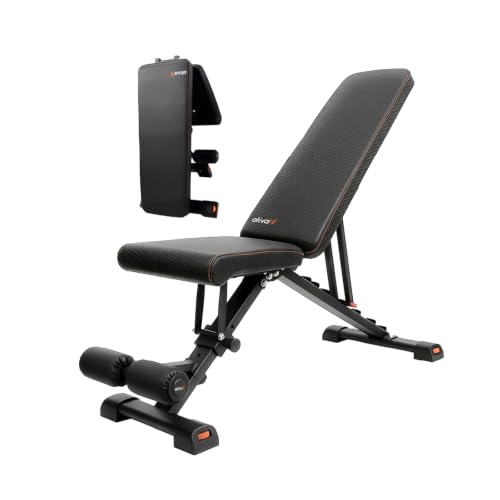
ATIVAFIT Multi-Functional Adjustable Bench
This one folds away easily after ab circuits, and the multiple back-pad angles make it easy to dial in a comfortable decline for hanging crunches off the edge.
- Folds compact for storage
- Several adjustable angles
- Lightweight to move around
- Max user weight lower than competitors
- Pad is on the firmer side

Signature Fitness Adjustable Bench
The wider base is built to handle loaded decline sit-ups with extra stability, and owners report it doesn't rock even when weight shifts side to side mid-rep.
- High weight capacity
- Wide, stable base
- Solid decline lock
- Bulkier, less portable
- Higher price point

ProsourceFit Flat Weight Bench
Simple and no-frills, great if you mainly want a stable flat surface for weighted crunches, hip thrusts, or Russian twists without extra bells and whistles.
- Easy setup out of the box
- Good stability for flat exercises
- Low price
- No incline/decline adjustment
- Limited for advanced ab progressions
How we chose
Rather than limiting ourselves to flat pressing benches, we concentrated on benches that people commonly use for ab and core training at home. One of our main criteria was decline angle quality, meaning whether the angle genuinely helps isolate the abs or simply behaves like a flat bench with a few added steps. Drawing on owner reports, we also weighed how stable each bench stays during weighted movements, and we considered the pad and leg roller comfort mentioned in reviews, along with how easily the bench folds or tucks away between sessions. We factored in price against build quality as well, because putting together a bench ab workout setup shouldn't cost as much as buying a full power rack.
What makes a bench good for ab workouts
Decline capability
A true decline position: where your head is lower than your hips, adds resistance to sit-ups and crunches by working against gravity more directly. Benches like the FLYBIRD and Finer Form models are specced to lock into a decline angle without slipping, which matters more than people expect once you start adding weight plates behind your head.
Leg anchor or rollers
To perform sit-ups, decline crunches, and leg raises properly, you need a way to secure your feet or ankles in place, whether through padded rollers, an ankle bar, or a leg lock, so your lower body doesn't rise off the bench during the movement. If a flat utility bench lacks this feature, it's still suitable for exercises such as Russian twists or weighted crunches, since your feet remain planted on the floor throughout.
Stability under load
Core exercises frequently call for rotating and moving your body weight from one side to the other, as with Russian twists or plate-loaded oblique crunches. If the bench isn't stable, it throws off the entire session. Benches with a broader base, such as the Signature Fitness model, felt considerably steadier through these kinds of movements.
Portability and storage
If you’re working out in a garage or spare room shared with other activities, a bench that folds flat (FLYBIRD, ATIVAFIT) is worth the trade-off versus a permanently-set sit-up station.
A simple bench ab workout to try
Once you have a bench, here’s a straightforward circuit worth trying: 3 rounds, minimal rest between exercises:
- Decline sit-ups — 12-15 reps, feet anchored under the roller pad
- Bench Russian twists — 20 total reps, feet on floor, holding a light plate or dumbbell
- Reverse crunches on the bench edge — 12 reps, hips lifting toward the chest
- Weighted flat crunches — 15 reps, holding a plate at chest level
Adjusting the decline angle up or down between sets is an easy way to scale difficulty without adding external weight.
Comparison table
| Bench | Decline setting | Leg anchor | Folds flat | Price |
|---|---|---|---|---|
| FLYBIRD Adjustable Weight Bench | Yes | Yes | Yes | $$ |
| Finer Form Sit Up Bench | Yes (multiple) | Yes | Partial | $ |
| CAP Barbell Adjustable Utility Bench | No | No | No | $ |
| ATIVAFIT Adjustable Bench | Yes | Yes | Yes | $ |
| Signature Fitness Adjustable Bench | Yes | Yes | No | $$ |
| ProsourceFit Flat Weight Bench | No | No | No | $ |
Related guides
- Best weight benches for home gyms
- Resistance training equipment guide
- Best adjustable dumbbells for home use
- Building a complete home gym
- Power rack buying guide
- All TalkGyms buying guides
- How we rank fitness equipment
- About TalkGyms
Ready to start your bench ab workout?
See current prices and availability on the top-rated adjustable benches for ab and core training.
Frequently asked questions
Can you really build ab muscle using just a bench?
Yes, especially if you use the decline setting and add weight over time. A bench adds resistance angles and stability that floor exercises alone don’t provide, making progressive overload easier to apply to ab training.
Do I need a decline bench specifically for ab workouts?
Not strictly: a flat bench works fine for crunches, Russian twists, and leg raises. A decline bench simply adds an extra difficulty lever without needing more equipment.
How often should I do a bench ab workout?
Two to three times per week is plenty for most people, since abs recover fairly quickly but still need rest days between sessions to adapt.
What’s the difference between a sit-up bench and a regular adjustable bench?
A sit-up bench usually has a built-in leg anchor or ankle rollers designed specifically for core work, while a general adjustable bench is built more broadly for pressing, rows, and other strength exercises.
Can a bench ab workout replace floor ab exercises entirely?
It doesn’t have to: many people combine both, using the bench for decline and anchored movements and the floor for planks or dead bugs that don’t need elevation.
Is a folding bench sturdy enough for ab work?
Most folding benches, like the FLYBIRD and ATIVAFIT models, are specced to be plenty stable for bodyweight and lightly weighted ab exercises, though very heavy loaded work benefits from a bulkier fixed-frame bench.
What weight capacity should I look for in a bench for ab training?
Look for at least 300 lbs capacity even if you’re not lifting heavy, this generally reflects a sturdier frame that won’t flex during dynamic core movements like twists or reverse crunches.
More Buying Guides
 Jump Rope Cardio Workout: The Ropes and Routines That Actually Deliver ResultsWhat Does a Mini Barbell Do? A Real-World Breakdown for Home GymsBarbell vs. Dumbbell: Which One Should Anchor Your Home Gym?
 Why Are Dumbbells So Expensive? What Actually Drives the Price in 2026
 The Best Barbell Tricep Workout Setup for Home Gyms in 2026How to Use Dumbbells: A Beginner’s Guide to Form, Weight, and Progression