Barbell Leg Workout: The Best Gear for Squats, Deadlifts, and Lunges at Home
A barbell leg workout is one of the most efficient ways to build lower-body strength at home, but it only works if you’ve got the right gear: a bar that doesn’t flex like a noodle, plates you can actually stack safely, and something to catch the bar when you fail a rep. For 2026, we put together the equipment list and programming approach we’d actually use for barbell squats, deadlifts, lunges, and hip thrusts in a home gym, no commercial rack access required.
The gear we'd actually buy for a home barbell leg day

Synergee Games Barbell
This bar has enough whip for cleans but stays stiff and predictable under a heavy back squat, which is what most home lifters actually need. The knurling bites without shredding your hands on high-rep front squats.
- Solid 190,000 PSI tensile steel
- Good knurl depth for grip security
- Fits standard 2-inch Olympic plates
- No bag included
- Sleeves can feel slightly loud without bumpers

CAP Barbell Olympic Bumper Plate Set
These bumpers let you drop a failed deadlift rep without dinging the floor or the plate, and the rubber compound holds up fine for garage-gym use. Not competition-grade, but nobody doing Bulgarian split squats needs that.
- Bounce-resistant rubber
- Standard 2-inch bore fits most bars
- Noticeably cheaper than name-brand bumpers
- Slight smell out of the box
- Color-coding isn't as precise as premium brands
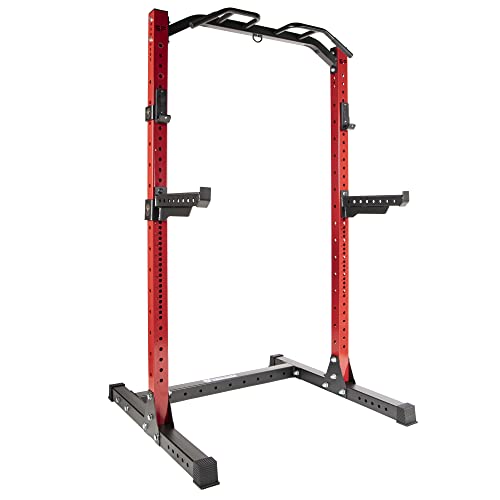
Signature Fitness Adjustable Squat Rack
The J-hooks and safety spotter arms make solo squatting to failure genuinely safer, and the footprint is small enough to fit a two-car garage without eating the whole bay. Assembly took us about an hour with a helper.
- Height-adjustable J-cups and safeties
- Solid steel frame, minimal wobble
- Reasonably compact for a full rack
- Heavy to move once assembled
- Weight capacity lower than commercial racks
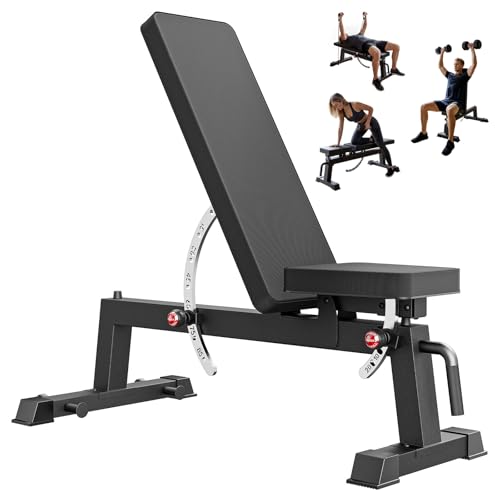
Papababe Olympic Weight Bench
We used this mostly for Bulgarian split squats and single-leg work, and the flat/incline adjustability made it easy to add variety to a barbell leg day without buying a second bench.
- Multiple incline positions
- Sturdy enough for elevated leg work
- Affordable entry point
- Padding is firmer than premium benches
- Not rated for the heaviest barbell loads

Yes4All Standard Barbell Pad
A cheap accessory that made a real difference on barbell hip thrusts and walking lunges, the bar no longer digs into the hip crease or collarbone, so you can focus on the leg muscles instead of the bruise forming.
- Genuinely reduces bar discomfort
- Slides on and off easily
- Compact, easy to store
- Can shift slightly on unweighted warm-up sets
- Foam compresses over time
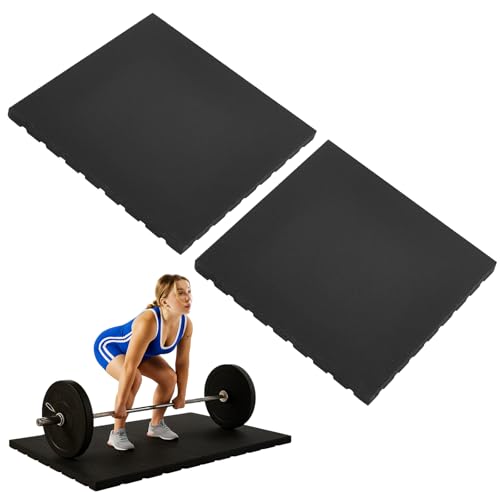
Fringe Sport Deadlift Platform Mat
If you're doing barbell deadlifts or rack pulls in a garage over concrete, this mat absorbs the impact noise and protects both the floor and the plates themselves.
- Thick enough to dampen loud drops
- Covers a generous footprint
- Easy to hose off
- Bulky to store when not laid flat
- Pricier than a basic rubber mat
How we chose
We prioritised equipment built around the essential barbell leg exercises, such as the back squat, front squat, deadlift, Romanian deadlift, walking lunge and hip thrust, rather than gimmicky add-ons. To make the list, each item needed to withstand repeated loading, fit into a typical garage or spare-room setup, and be practical for a home lifter to put together and store away. We assessed how well bars were knurled, how much plates bounced or made noise, how adjustable the safety arms on racks were, and how padded and comfortable the benches felt.
Building a barbell leg workout at home
The core lifts you need equipment for
Most effective barbell leg days cycle through a few staples. The main lift is typically back squats or front squats, the posterior chain gets trained with Romanian deadlifts or conventional deadlifts, single-leg work comes from walking lunges or Bulgarian split squats, and hip thrusts serve as glute-focused finishing sets. The equipment each movement calls for varies a little. Squats and deadlifts require a rack and bumper plates, whereas lunges and hip thrusts are made easier with a bench and a barbell pad.
Sample structure
A typical session might look like 4-5 sets of back squats, 3-4 sets of Romanian deadlifts, 3 sets of walking lunges per leg, and 3 sets of barbell hip thrusts. This only takes about 45 minutes once you’re not waiting on rack access, which is one of the real advantages of training legs with a barbell at home instead of a commercial gym.
Do you need a full power rack?
Once you're back squatting beyond a certain weight, yes, a rack with adjustable safety arms is what allows you to bail safely when a rep gets stuck. But if deadlifts and lighter accessory lunges are all you're doing, a barbell and bumper plates alone will do the job, and you can skip the rack entirely.
Barbell vs. Bar weight: what matters for legs
Most standard barbells weigh 45 lbs (20 kg) for a men’s bar or 33 lbs (15 kg) for a women’s bar. For squats and deadlifts, bar whip matters less than for Olympic lifting, you want a stiffer bar that won’t flex noticeably under a heavy squat. Knurling depth matters more for front squats and deadlifts, where grip security under load is the difference between a clean rep and a missed one.
| Gear | Best for | Price range | Space needed |
|---|---|---|---|
| Standard Olympic barbell | Squats, deadlifts, RDLs | $$ | 7 ft length |
| Bumper plate set | Deadlifts, dropped reps | $$ | Stackable, small footprint |
| Squat rack | Safe heavy squats | $$$ | 4×4 ft footprint |
| Adjustable bench | Lunges, hip thrusts, step-ups | $-$$ | Compact, foldable options exist |
| Barbell pad | Hip thrusts, front-rack comfort | $ | Negligible |
Common mistakes with home barbell leg training
The biggest one we see is skipping safety arms or spotter blocks entirely and squatting to failure without a way to bail. The second is using standard steel plates instead of bumpers for deadlifts, which chips concrete floors and can crack the plates themselves. The third is neglecting single-leg work, walking lunges and Bulgarian split squats fix imbalances that bilateral squats and deadlifts can mask.
Related guides
- More home gym guides
- Best power racks for home gyms
- Best barbells and weight plates
- Best adjustable weight benches
- Complete home gym setups
- Best adjustable dumbbells
- How we rank equipment at TalkGyms
Ready to build your leg day setup?
Compare top-rated barbells, plates, and racks for home use.
Frequently asked questions
Do I need a squat rack for a barbell leg workout at home?
Not always. If you’re doing deadlifts, RDLs, or lunges, you can skip the rack. For heavy back squats or front squats, a rack with safety arms is strongly recommended for solo lifting.
What’s the minimum equipment for a barbell leg day?
A standard Olympic barbell and a set of plates covers deadlifts, RDLs, and lunges. Add a rack if you want to squat heavy, and a bench if you want hip thrusts or step-ups.
Should I use bumper plates or standard plates for leg day?
Bumper plates are better if you’re deadlifting and might drop the bar, since they protect both your floor and the plates. Standard plates are fine if you’re only squatting and always racking the bar under control.
How much space do I need for a barbell leg workout setup?
A squat rack with a bar typically needs about a 4×4 ft footprint plus clearance to load plates, and roughly 7 feet of bar length. A simple barbell-and-plates setup needs much less.
Can I do a full leg workout with just a barbell and no bench or rack?
Yes. Squats can be done without a rack if you clean the bar to your shoulders, deadlifts and RDLs need no rack at all, and walking lunges only need floor space.
What barbell weight is best for leg training?
A standard 45 lb (20 kg) men’s bar works for most lifters. Smaller or newer lifters, especially those doing front squats, may prefer a 33 lb (15 kg) women’s bar for easier bar speed and positioning.
Is a barbell better than dumbbells for leg workouts?
Barbells let you load significantly more weight for compound lifts like squats and deadlifts, which is more efficient for building strength. Dumbbells are better for unilateral work and don’t require a rack.
More Buying Guides
 Jump Rope Cardio Workout: The Ropes and Routines That Actually Deliver ResultsWhat Does a Mini Barbell Do? A Real-World Breakdown for Home Gyms
 How to Do the Dumbbell Good Morning (Form Guide + Best Dumbbells for It)
 Bench Ab Workout: Best Benches for Building Real Core Strength at HomeTrap Workouts With Dumbbells: The Best Dumbbells for Building Thick Traps at Home
 Treadmill Sprint Workouts: How to Do Them Safely (and the Treadmills That Can Handle Them)