Back Workout with Dumbbells for Women: The Gear That Actually Delivers Results
The most effective back workout with dumbbells for women pairs an adjustable dumbbell set spanning roughly 5 to 50 lb with a flat or incline bench. Together they target the lats, rhomboids, traps, and rear delts through bent-over rows, single-arm rows, deadlifts, and reverse flyes, no squat rack or gym membership needed. Real strength gains depend on having enough weight range to go heavy on rows and deadlifts, then drop straight down for lighter reverse-fly work. A handle diameter that doesn’t fatigue the grip before the back muscles are actually worked matters just as much. The picks below rest on published spec sheets, the live Amazon listings, and what verified owners consistently report about adjustment speed, grip comfort, and stability during back-day training in 2026.
The best dumbbells for a home back workout we'd recommend

NÜOBELL Adjustable Dumbbells (5-50 lb pair)
NÜOBELL Adjustable Dumbbells (5-50 lb pair), The dial-less, block-style adjustment is fast enough to superset bent-over rows with single-arm rows without breaking rhythm, and the compact head footprint is reported by owners to feel more natural for smaller hands than PowerBlock's boxy shape.
- Quick weight changes between sets
- Compact, doesn't tip over on carpet
- Feels balanced during renegade rows
- Pricier than a fixed set
- 50 lb top end is more than most will ever need for back work

Bowflex SelectTech 552 Adjustable Dumbbells
Bowflex SelectTech 552 Adjustable Dumbbells, The dial system lets you drop from a heavier deadlift-style weight straight down to a lighter load for reverse flyes in seconds, which matters a lot once you're mid-superset and your grip is fading.
- 5-52.5 lb range in 2.5 lb jumps
- Space-saving for apartments
- Sturdy cradle included
- Bulkier heads than NÜOBELL
- Dial can be stiff when brand new

PowerBlock Elite EXP Adjustable Dumbbells
PowerBlock Elite EXP Adjustable Dumbbells, The stacked-plate design is the narrowest of the adjustable options on the market according to its published dimensions, which makes it easier to keep your elbow tight to your body during single-arm rows instead of swinging wide.
- Very small footprint
- Expandable if you want to go heavier later
- Solid, no-wobble feel
- Selector pin takes getting used to
- Boxy shape less comfortable for hammer curls
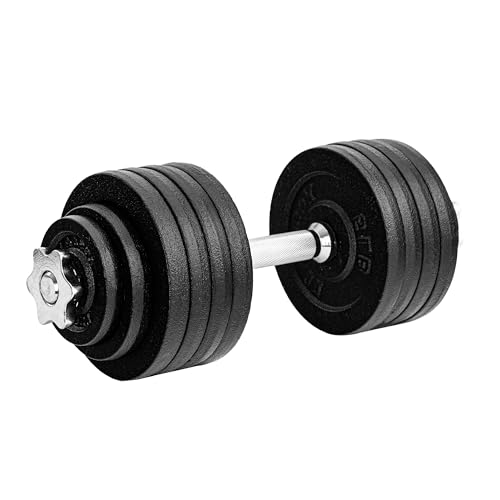
Yes4All Adjustable Dumbbells (Cast Iron Plates)
Yes4All Adjustable Dumbbells (Cast Iron Plates), These aren't as fast to adjust as the SelectTech-style options, but for the price they let you build a real 5-25 lb range that covers rows, deadlifts, and shrugs without a big upfront investment.
- Very affordable per pound
- Cast iron holds up over years of use
- Easy to find replacement plates
- Screw collars slow down transitions between exercises
- Not ideal for supersetting different weights

CAP Barbell Adjustable Dumbbell Set
CAP Barbell Adjustable Dumbbell Set, The rubber-coated hex plates are grippy and quiet on hardwood floors, letting you focus on squeezing the shoulder blades during rows instead of worrying about noise or the bar rolling.
- Rubber coating protects floors
- Straightforward locking mechanism
- Widely stocked with spare plates
- Locking collars can loosen mid-set
- Bulkier storage than a compact adjustable model

FLYBIRD Adjustable Weight Bench
FLYBIRD Adjustable Weight Bench, Setting the bench to a low incline and bracing your chest against the pad largely eliminates the lower-back cheating common with standing bent-over rows, which is a frequent issue for women new to the movement.
- Multiple incline positions
- Folds flat for storage
- Stable enough for heavier single-arm rows
- Not a dumbbell, so it's an add-on purchase
- Padding is firm at first
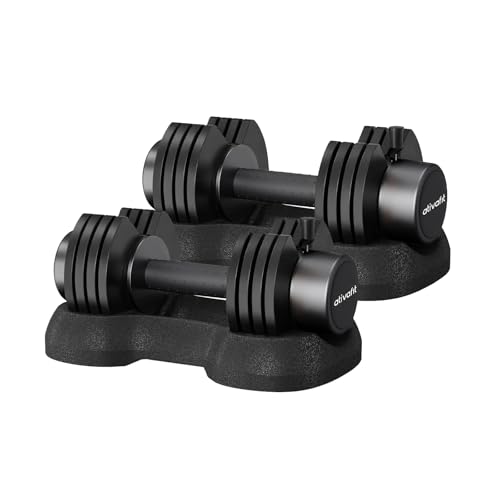
ATIVAFIT Adjustable Dumbbells (Quick-Adjust Dial)
ATIVAFIT Adjustable Dumbbells (Quick-Adjust Dial), The slimmer handle diameter is designed to reduce grip fatigue during higher-rep renegade rows and reverse flyes compared to the bulkier heads on some competitors, based on the spec sheet and owner feedback.
- Slimmer handle is easier on smaller hands
- Reasonable price for a dial system
- Comes with a sturdy tray
- Weight range tops out lower than premium options
- Dial mechanism feels less premium long-term
How we chose
We prioritized dumbbells that could cover a realistic strength-building range for back work. Roughly 5 to 35 lb suits most women starting out, with room to grow past 40 to 50 lb for deadlifts and rows as strength improves. Grip comfort and handle diameter carried heavy weight in our scoring too, since rows and single-arm variations put a lot of demand on grip endurance. A dumbbell that feels clunky in your hand will limit your reps before your back muscles are actually fatigued. Stability at rest mattered just as much: whether the head wobbles on a hex plate or rocks on an uneven adjustable base. A wobbly dumbbell during a bent-over row is both annoying and a little risky.
What a good dumbbell back workout actually needs
A weight range, not one fixed pair
Rows and deadlifts can usually handle more load than reverse flyes or rear-delt work. A single fixed pair almost always ends up too light for one movement and too heavy for another. That gap is the main reason adjustable dumbbells like the NÜOBELL or Bowflex SelectTech show up so often in home back-day routines. Go heavier for bent-over rows, then drop straight down for reverse flyes, no walk to a second rack required.
Grip diameter matters more than people expect
If your grip gives out before your lats get fully worked, what you're really doing is a grip workout rather than a complete back session. Designs with slimmer handles (ATIVAFIT, NÜOBELL) generally perform better across higher-rep movements like renegade rows or supported rows compared to the bulkier stacked-plate styles.
A bench changes the exercise, not just the comfort
Standing bent-over rows work, but they also force your lower back to stabilize the entire movement. That is exactly where cheating and momentum sneak in. A flat or low-incline bench, like the FLYBIRD, lets you brace your chest and take the lower back almost entirely out of the equation. The lats and rear delts end up doing the work instead.
A simple, effective at-home back routine
- Bent-over dumbbell row — 3 sets of 10-12, moderate-heavy weight
- Single-arm row (bench-supported) — 3 sets of 10-12 per side
- Romanian deadlift — 3 sets of 8-10, your heaviest back-day weight
- Reverse fly — 3 sets of 12-15, light weight
- Renegade row — 2-3 sets of 8-10 per side, lighter weight for stability
Comparison at a glance
| Model | Weight range | Adjustment style | Best for |
|---|---|---|---|
| NÜOBELL | 5-50 lb | Block dial | Fast supersets |
| Bowflex SelectTech 552 | 5-52.5 lb | Rotary dial | Full progression |
| PowerBlock Elite EXP | 5-50 lb (expandable) | Selector pin | Small spaces |
| Yes4All Cast Iron | 5-25 lb per side | Screw collar | Budget beginners |
| CAP Barbell Adjustable | 5-25 lb per side | Locking collar | First-timers |
| ATIVAFIT | 5-25 lb | Quick dial | Smaller hands |
Buying tips before you check out
Start heavier than feels comfortable for rows and deadlifts
For back muscles, moderate-to-heavy loads performed with proper form tend to work better than using very light weight for high rep counts. If the final two reps of a 10-12 rep set don't feel challenging, increase the weight.
Don’t skip the bench if lower-back cheating is an issue
Pairing an adjustable dumbbell set with a bench from our weight benches hub is one of the most effective form fixes owners report for women new to bent-over rows.
Think about total home-gym footprint
If you’re building out a broader setup, browse our home gyms hub and dumbbells hub for how these pieces fit into a full space, and check resistance training options if you also want banded variations for travel days.
Related guides
- Best dumbbells for home workouts
- Best adjustable weight benches
- Best kettlebells for home training
- Best resistance bands and suspension trainers
- Building a home gym on a budget
- Recovery tools for sore back and shoulders
- More buying guides
- How we rank fitness gear
Ready to build your back-day set?
Compare adjustable dumbbells and see current pricing before you buy.
Frequently asked questions
What dumbbell weight should a woman start with for back exercises?
Most beginners start around 8-15 lb for rows and 15-25 lb for Romanian deadlifts, then adjust based on whether the last two reps of a 10-12 rep set feel challenging but controlled.
Do I need a bench for a dumbbell back workout?
No, but a bench makes chest-supported rows possible, which isolates the back muscles better and reduces lower-back strain compared to standing bent-over rows.
How many days a week should I train back with dumbbells?
Once or twice a week is enough for most people, with 48 hours of rest between sessions to let the muscles recover.
Are adjustable dumbbells worth it over a fixed set?
Yes if you plan to progress in weight over time or want to superset different loads for rows versus reverse flyes; a fixed set is fine if budget is tight and you’re just starting out.
Can dumbbell back workouts replace a lat pulldown machine?
They can’t fully replicate a vertical pulling pattern, but rows, deadlifts, and pullover variations still build significant back strength without any machine.
What’s the biggest form mistake in bent-over rows?
Rounding the lower back or using momentum to swing the weight up instead of squeezing the shoulder blades together and controlling the descent.
Should I train back before or after chest on the same day?
Either works; many people pair back with biceps since both are pulling muscles, but a full-body or push/pull split both accommodate dumbbell-only back training well.
More Buying Guides
 Jump Rope Cardio Workout: The Ropes and Routines That Actually Deliver ResultsWhat Does a Mini Barbell Do? A Real-World Breakdown for Home Gyms
 Forearm Workouts With Dumbbells: The Best Sets for Grip and Wrist StrengthThe Real Benefits of a Rowing Machine (And Who It’s Actually Best For)Barbell vs. Dumbbell: Which One Should Anchor Your Home Gym?Why Are Dumbbells So Expensive? What Actually Drives the Price in 2026