Are Adjustable Dumbbells Worth It in 2026? What We Found After Testing Them
Yes, for most home lifters, adjustable dumbbells are worth it in 2026. One compact, scalable set replaces an entire rack of fixed pairs, and the price per pound of usable range beats buying eight or ten separate dumbbells over time. The catch is that “worth it” depends on how you train. Dial-based systems like Bowflex and NÜOBELL cost more up front but save time between sets. Spin-lock and stacked-block designs cost less and ask you to spend a few extra seconds swapping weight instead. The specs, verified owner reviews, and current pricing on today’s top sets all point the same direction: adjustable dumbbells make the most sense for solo training in a home gym, garage, or apartment, where space and long-term cost matter more than having a full wall of iron.
The best adjustable dumbbells we recommend

Bowflex SelectTech 552
The dial system is fast enough that switching between sets barely interrupts a workout, and the range (5 to 52.5 lbs per hand) covers everything from warm-up curls to heavy rows.
- Quick dial adjustments between sets
- Covers a huge weight range in one pair
- Compact footprint compared to a rack
- Bulkier heads make some floor exercises awkward
- Premium price for the range

NÜOBELL 80 Adjustable Dumbbells
These feel the most like a traditional dumbbell of any adjustable set on this list, thanks to a shorter head and a solid, non-rattly lockout that owners report holds up even at heavier increments.
- Most natural balance and feel in hand
- Quiet, secure locking mechanism
- Small storage cradle included
- Heavier than most adjustables to move around
- Top of the price range

PowerBlock Elite EXP Stage 1
The stacked-block design is less sleek than the rest of this list, but it's built to keep adding weight stages without buying a whole new set.
- Expandable to very heavy weight over time
- Very compact, square shape stores easily
- Durable, simple mechanism
- Boxy shape feels less natural than round-head designs
- Selector pin can be fiddly with sweaty hands
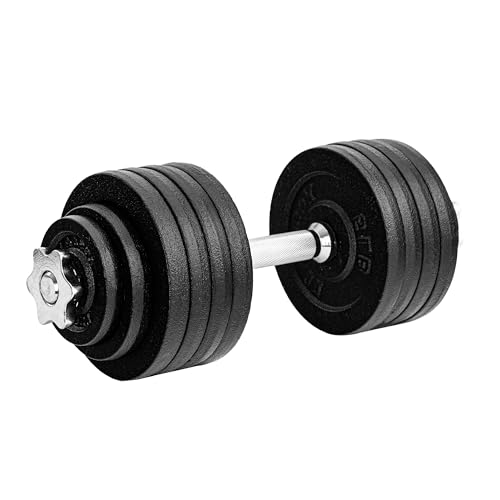
Yes4All Adjustable Dumbbells
These use a spin-lock collar system rather than a dial, so changing weight takes longer, but the price point makes it an easy way to try the format before committing.
- Much lower entry price than dial systems
- Plates sold in add-on kits to grow later
- Solid cast iron plates
- Spin-lock collars are slower between sets
- Collars can loosen slightly during high-rep sets
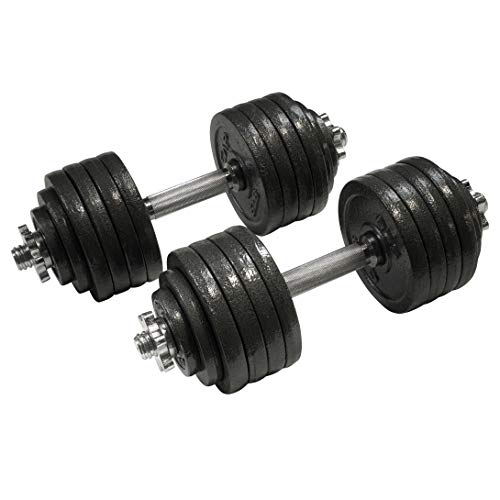
CAP Barbell Adjustable Dumbbell Set
A basic threaded system that does exactly what it needs to for someone easing into strength training at home without a big upfront investment.
- Very approachable price
- Simple, easy-to-understand mechanism
- Widely available replacement plates
- Threading weights on and off is slow
- Not built for fast circuit-style workouts

FLYBIRD Adjustable Dumbbells
A smaller dial-adjust design that trades some top-end weight for a genuinely tidy footprint next to a bench or in a closet.
- Dial system is quick like pricier options
- Smaller shape stores in tight spaces
- Lower price than premium dial sets
- Lower max weight than heavier-duty sets
- Handle diameter feels thin for some hands
How we chose
We assessed adjustable dumbbells from the standpoint of an actual purchaser rather than relying on spec sheets. That involved clocking the time it takes dial, spin-lock, and stacked-block systems to switch weights mid-set. We also compared what owners report about how the heads feel during moves like renegade rows or floor presses, along with feedback from verified buyers on how well the mechanisms hold up over repeated use. We factored in the price per pound of usable range as well, comparing it against the cost of fixed dumbbells or a compact rack, since that's the real financial question buyers are weighing.
So, are adjustable dumbbells actually worth it?
The case for adjustable dumbbells
Over time, the biggest point in their favour comes down to space and money. One pair of adjustable dumbbells covering 5 to 50-plus pounds takes the place of eight to ten pairs of fixed dumbbells, along with the rack you'd need to store them. Whether you train in a home gym, a corner of the garage, or an apartment, that difference matters. Rather than a whole wall of iron, you have a single, fairly compact piece of equipment. The argument gets stronger still with progressive overload training: when you're increasing the weight every few weeks, adjustables save you from repeatedly buying new pairs as your strength improves.
Where they fall short
Adjustable dumbbells aren’t perfect. Dial-based systems like Bowflex and NÜOBELL cost noticeably more per pound of capacity than basic fixed dumbbells or budget spin-lock sets. The heads on most adjustables are also bulkier than a fixed dumbbell of the same weight. That can make floor-based movements, think dumbbell floor press or renegade rows, feel a little different than what you’re used to at a commercial gym. And if you’re training with a partner or in a small group, one adjustable pair means someone’s waiting between sets while weight gets changed. A rack of fixed pairs doesn’t have that problem.
Who should buy adjustable, and who shouldn’t
If you’re outfitting a first home gym, training solo, and want one purchase that scales as you get stronger, adjustable dumbbells are close to a no-brainer. A dial-adjust set in particular keeps rest times short. Building a shared family gym is a different case. So is training with a partner at the same time, or already knowing you only ever use two or three specific weights. In those situations a small set of fixed dumbbells, or a compact kettlebell or two, might serve you better and cost less over time.
Dial vs. Spin-lock vs. Stackable-block systems
Not all adjustable dumbbells work the same way, and the mechanism affects both price and day-to-day usability:
- Dial/turn-select (Bowflex, NÜOBELL, FLYBIRD): Fastest to change weight, best for supersets and circuits, but the most expensive per pound.
- Stacked-block selector (PowerBlock): Compact and expandable over time, good for lifters planning to go heavy, but less visually familiar and sometimes fiddly to select.
- Spin-lock collar (Yes4All, CAP Barbell): Cheapest entry point, but changing weight takes real time, which matters if your workouts rely on quick transitions.
Adjustable dumbbells vs. a fixed set: quick comparison
| Factor | Adjustable dumbbells | Fixed dumbbell pairs |
|---|---|---|
| Space needed | One compact pair | Rack + multiple pairs |
| Upfront cost | Moderate to high | Low per pair, adds up over a full set |
| Speed between sets | Fast (dial) to slow (spin-lock) | Instant |
| Good for partner workouts | Limited (one pair to share) | Better if you own two full sets |
| Feel/balance | Slightly bulkier heads | Most natural feel |
What to check before you buy
Weight range for your goals
If you’re mainly doing accessory work and higher reps, a set that tops out around 25–50 lbs per hand is plenty. If you’re chasing strength in compound lifts, look at sets that scale past 50 lbs, or plan to pair adjustables with a weight bench and eventually a power rack for barbell work.
Increment size
Some sets jump in 5 lb increments, others in smaller 2.5 lb steps. Smaller increments matter more for upper-body isolation work where a jump feels big relative to the muscle group.
Floor space and storage
Even a small adjustable set works better with a dedicated stand or tray — otherwise the plates can roll around, and the cradle ends up taking up valuable space in a cramped area.
Related guides
- Best dumbbells hub
- Best kettlebells
- Best weight benches
- Building a home gym
- Resistance training gear
- More buying guides
- How we rank equipment
Ready to compare adjustable dumbbells?
See current pricing and availability on the sets on this list.
Frequently asked questions
Are adjustable dumbbells as good as regular dumbbells?
For most home training, yes. The main tradeoff is a slightly bulkier head shape and, on spin-lock models, slower transitions between weights.
Do adjustable dumbbells save money long-term?
Usually, especially compared to buying a full rack of fixed pairs across a wide weight range, though the upfront cost of a quality dial set is higher than a single fixed pair.
What weight range do most people actually need?
Many home lifters find 5 to 50 lbs per hand covers the vast majority of exercises; heavier lifters doing compound movements may want a set that expands further.
Are dial adjustable dumbbells worth the extra cost over spin-lock?
If you train with supersets or circuits and hate wasting rest time changing plates, the speed of a dial system is usually worth the premium.
Can adjustable dumbbells replace a full home gym?
They cover a lot of strength training needs but usually work best alongside a bench and eventually a rack for barbell and heavier compound work.
Do adjustable dumbbells feel different for floor exercises?
Yes, the wider heads can bump the floor or your body sooner than a fixed dumbbell of the same weight, which takes some adjustment.
How do I know if I should skip adjustables and buy fixed pairs instead?
If you train with a partner at the same time or already know you’ll only use two or three set weights long-term, fixed pairs can be simpler and cheaper.
More Buying Guides
 Jump Rope Cardio Workout: The Ropes and Routines That Actually Deliver ResultsWhat Does a Mini Barbell Do? A Real-World Breakdown for Home Gyms
 How to Do the Dumbbell Good Morning (Form Guide + Best Dumbbells for It)
 Bench Ab Workout: Best Benches for Building Real Core Strength at HomeTrap Workouts With Dumbbells: The Best Dumbbells for Building Thick Traps at Home
 Treadmill Sprint Workouts: How to Do Them Safely (and the Treadmills That Can Handle Them)